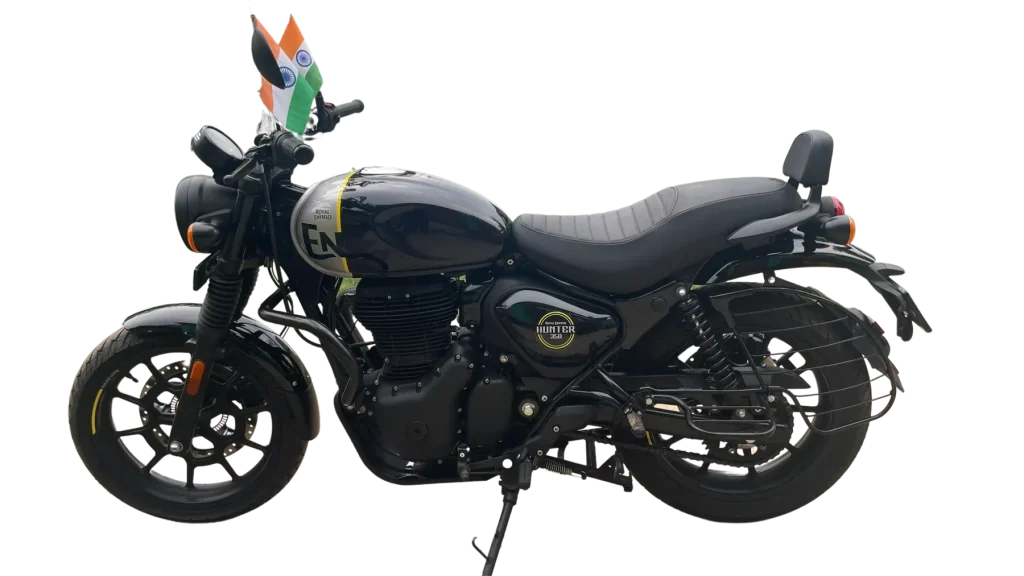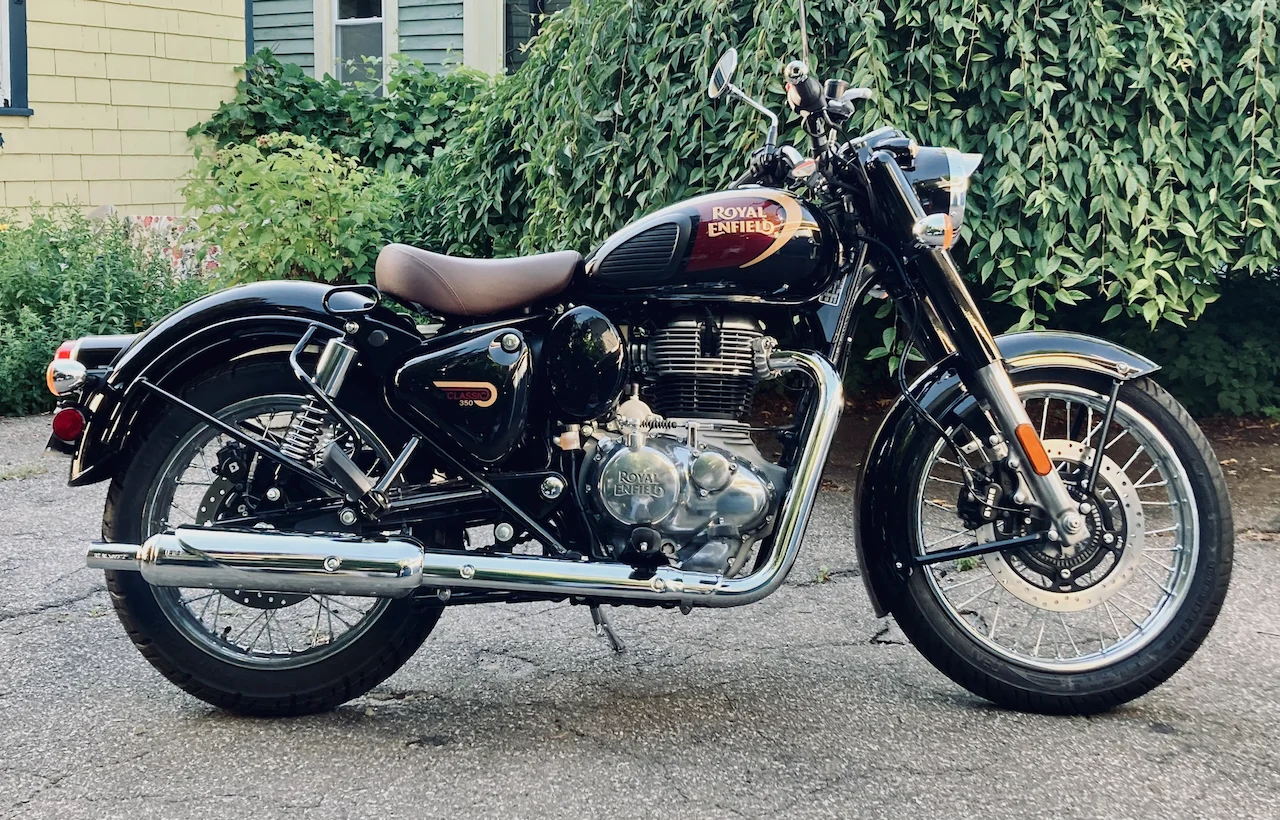
The Classic 350 and Hunter 350 are easy to compare by engine capacity and much harder to compare by the things that matter in a crowded parking space. Start with how you use a motorcycle: where you park, how often you carry a passenger and how comfortable you feel balancing it at walking speed.
Both belong to Royal Enfield’s 349cc family, but that shared headline does not make the ownership experience interchangeable. This is a comparison of the current India-market specification and a practical buying checklist, rather than a claim that we have road-tested either motorcycle.
Use the dimensions as a starting point
Royal Enfield’s India pages list 27Nm for both models. The Hunter is listed at 181kg with a 790mm seat; the Classic at 195kg with an 805mm seat. The manufacturer describes those kerb weights with 90% fuel and oil, and warns that specifications vary by variant.
| Published figure | Hunter 350 | Classic 350 |
|---|---|---|
| Displacement | 349cc | 349cc |
| Listed torque | 27Nm | 27Nm |
| Seat height | 790mm | 805mm |
| Kerb weight | 181kg | 195kg |
| Wheelbase | 1,370mm | 1,390mm |
| Fuel capacity | 13 litres | 13 litres |
The listed weight difference is 14kg. That is a useful reason to try moving both bikes before deciding; it is not a guarantee that one will feel easier for every rider. Seat width, handlebar position, luggage and the shape of your parking space also affect confidence.
Run the parking test before the road test
With the dealer’s permission and assistance, practise the movements you will repeat at home. Bring the motorcycle upright from its stand, hold it securely and move it a short distance with the engine off. Try a controlled backward movement on level ground. Stop if you cannot manage the balance comfortably.
Next, describe your actual parking problem. A narrow gate, a slope or a space that requires reversing uphill can matter more than a small difference in advertised performance. Do not let a successful forward ride distract you from a daily manoeuvre you will have to make without help.
Check fit with your normal equipment
Wear your riding footwear. Sit naturally, place your hands on the controls and check whether you have to stretch or lock your elbows. Look at the reach to the levers and your position when stopping. A seat-height number does not describe the whole fit, because the seat’s shape changes how your legs reach the ground.
If a passenger is part of the plan, involve them in the assessment where the dealer permits it. Check the pillion seat, footrest position, mounting process and luggage arrangements. An attractive single-seat display tells you little about regular two-person use.
Compare the exact variants on the invoice
Ask for the current specification of the two motorcycles you are actually offered. Confirm wheel and tyre construction, braking equipment, lighting, charging provision and accessories. Photos of a different model year or a higher variant should not decide the purchase.
For puncture planning, ask the dealer to explain the repair procedure for the fitted tyres and wheels. For service, request the schedule and an itemized estimate for the first routine visits. Keep consumables and optional accessories separate so the quotations remain comparable.
Check the braking description on each variant with our ABS equipment checklist.
Give both test rides the same job
Use a familiar, permitted route with the same rider and equipment. Pay attention to clutch effort, stop-start control, visibility through the mirrors, your knees and wrists, and how confidently you can make an ordinary low-speed turn. You do not need an aggressive ride to learn whether a motorcycle suits a commute.
Immediately afterwards, write one thing that worked and one thing that bothered you. Our short test-ride worksheet helps keep the showroom conversation from replacing your own observations.
Which one should make the shortlist?
Put the Hunter first if reducing the weight you must manage is a priority and its fit works for you. Put the Classic alongside it if you prefer its layout and can comfortably manage the extra mass. Neither suggestion overrides a fit problem, an unsuitable parking arrangement or a poor local support experience.
Finish with the complete on-road quotations and a realistic ownership budget. The better choice is the motorcycle whose everyday compromises you understand before delivery.

Amelia Brooks
Editorial pen namePractical guides to phones, two-wheelers and gaming from the NewsHoxs desk. Read the bio & browse all stories ↗
See our coverage methodology or send a correction.