The Hunter 350 deserves a fit and parking assessment before a purchase decision. Its 790 mm listed seat height is only one part of managing the motorcycle’s documented 181 kg kerb weight.
A motorcycle can look approachable on a specification page and still be awkward in a particular parking space. With the Royal Enfield Hunter 350, begin with the place you will keep it, the traffic you ride through and the controls you must use repeatedly. Styling can stay on the shortlist, but it should not decide those tasks for you.
Current India specifications that deserve attention
| Item | Documented specification | Buying implication |
|---|---|---|
| Engine | 349cc single-cylinder, air-oil cooled | Discuss the actual riding pattern with the dealer |
| Quoted output | 20.2 BHP at 6,100 rpm; 27 Nm at 4,000 rpm | These are maker figures, not a road-test measurement |
| Transmission | Five-speed; assist-and-slip clutch | Assess reach and repeated control use during a permitted demonstration |
| Seat and weight | 790 mm seat; 181 kg kerb weight with 90% fuel and oil | Judge balance and manoeuvring together |
| Tank | 13 litres | Tank size alone cannot establish a real touring range |
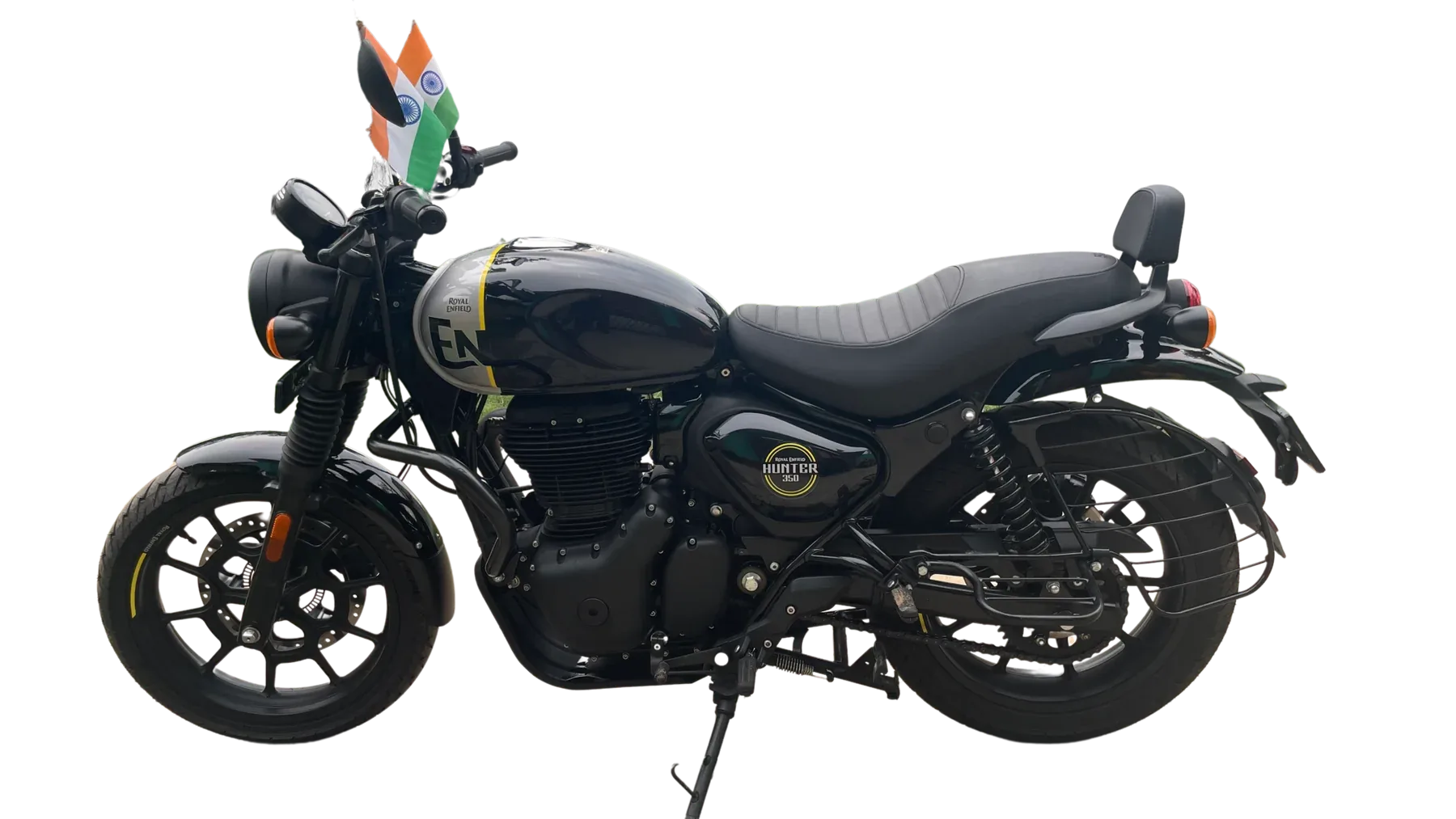
The manufacturer’s current page describes updated equipment, including an LED headlight, a Type-C charging port and navigation-related features. Confirm the exact variant and delivered equipment on the quotation. The accompanying real photograph shows an earlier Hunter 350 and should not be used to identify current equipment or colours.
Make the demonstration answer your commute
Take your usual riding footwear and suitable gear. Check whether you can reach the controls comfortably and how the bike feels when stationary. With permission and supervision, assess the manoeuvre you actually need for parking. A low-looking seat does not settle leverage, balance or the effect of an uneven surface.
On an authorised route, note repeated clutch use, the comfort of your posture and whether anything distracts you in ordinary traffic. Record the route duration and the conditions. A short demonstration cannot establish all-day comfort or long-term reliability, but it can reveal a fit problem worth investigating before a deposit.
Keep a passenger and luggage in the discussion
If you normally carry someone, assess the passenger arrangement with the dealer rather than deciding from the rider’s seat alone. Confirm the relevant load limits and the approved luggage options. An accessory should solve a specific carrying or comfort need, and its fitting requirements belong in the quote.
Ask what differs between the demonstration motorcycle and the model being supplied. Tyres, accessories and settings can change the impression. Use the owner manual for checks and adjustments; do not alter a demonstration bike yourself to make a comparison feel more dramatic.
Build the ownership quote before judging value
Request an itemised on-road quote and keep finance costs separate from the motorcycle price. Include suitable protective gear, scheduled service, insurance and a reserve for ordinary wear. Use your own monthly distance in the ownership-cost worksheet rather than assuming an economy figure from a different rider.
A value comparison should also account for the local workshop you will use and the time it takes to reach it. Ask for the service schedule and examples of normal service items. A verbal estimate is less useful than a clear written explanation of what is included.
The practical shortlist decision
Keep the Hunter 350 on your list if its fit, controls, parking demands and complete ownership budget work for your everyday route. Pause if the purchase rests mainly on appearance while manoeuvring or passenger comfort remains unresolved. This article analyses documented specifications; NewsHoxs has not road-tested the motorcycle or measured its mileage.

Amelia Brooks
Editorial pen namePractical guides to phones, two-wheelers and gaming from the NewsHoxs desk. Read the bio & browse all stories ↗
See our coverage methodology or send a correction.