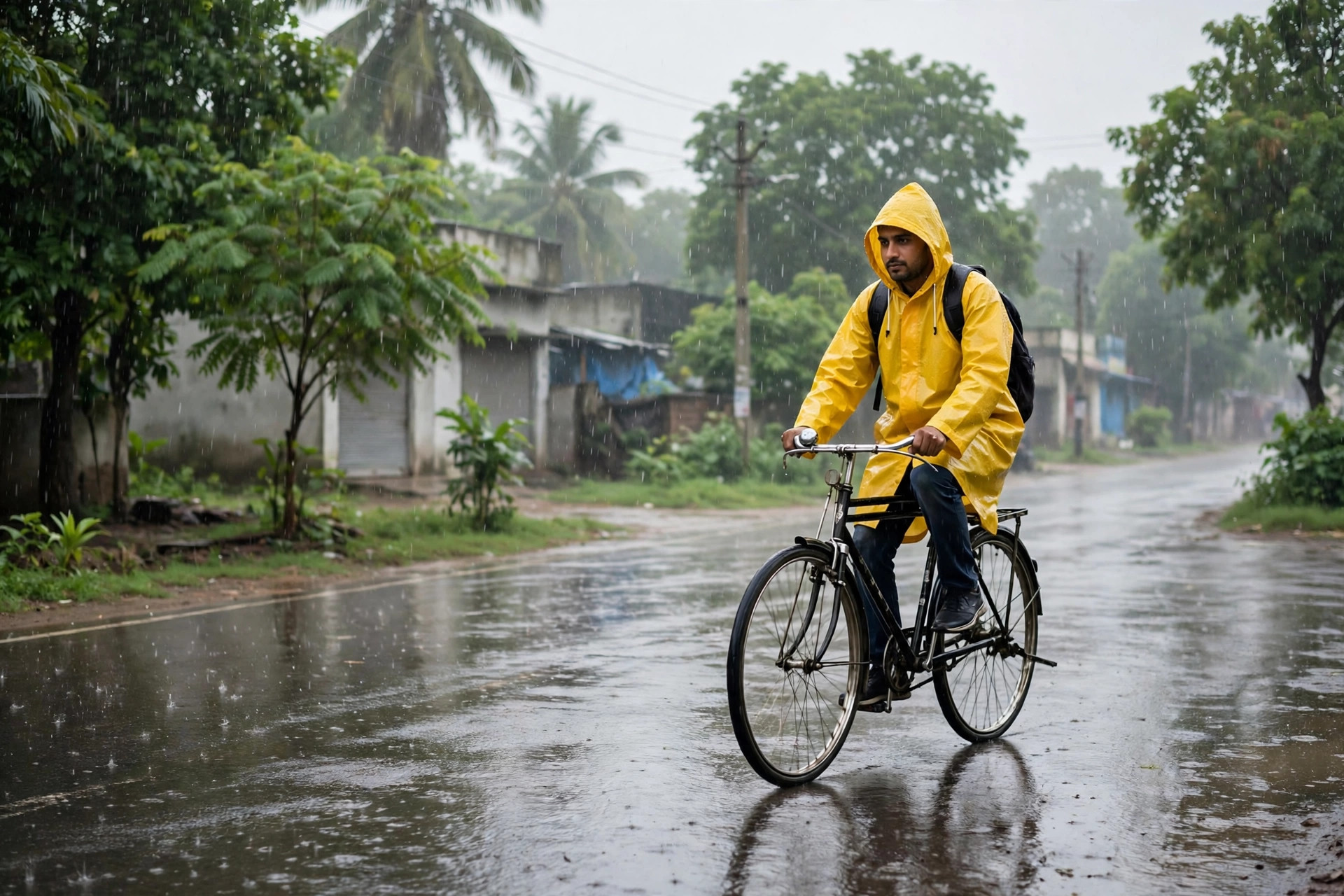
Rain changes a bike ride in minutes. The road that was dry and grippy in the morning becomes slick by evening. Brakes take longer to work. Cars splash water across your visor. A small puddle can hide a pothole. I have ridden home in a sudden shower in Pune, and the difference was clear: the same speed that felt safe in dry weather felt too fast in rain.
Riding in rain is not about being brave. It is about slowing down, leaving more space, and being smooth with every input. The bike will do its job if you give it time to do it.
Slow down before you need to
The most important rule in rain is to slow down early. Reduce your speed by about a third compared to dry weather, and more if the rain is heavy. If you normally ride at 60 kmph on a city road, ride at 40 kmph in rain. On a highway, slow down even more, and stay in the left lane.
The first ten minutes of rain are the most slippery. Oil, dust, and rubber from tyres mix with water and form a thin layer on the road. It is easy to miss, but it makes the road much less grippy. If it starts raining after a long dry spell, be extra careful in those first minutes.
Leave more space between you and the vehicle in front. In dry weather, a two-second gap is a good rule. In rain, make it four seconds or more. Pick a fixed point on the road, such as a signboard, and count the seconds after the vehicle in front passes it. If you pass it in less than four seconds, you are too close.
Brake earlier and more gently. Start braking well before a traffic light or a turn, and use both brakes together. Squeeze the front brake gently, and press the rear brake smoothly. Do not grab the front brake hard, especially on a wet road. If the bike has ABS, it will help, but ABS does not make the road grippy. It only stops the wheels from locking.
Watch the road surface
Not all parts of the road are the same in rain. Painted lines, zebra crossings, and manhole covers become very slippery when wet. Avoid riding on them if you can, and do not brake or turn sharply while you are on them. Cross them in a straight line, at a steady speed.
Puddles are another risk. A puddle can hide a pothole, a broken patch, or a drain. Do not ride through a deep puddle if you can go around it. If you have to go through water, slow down first, keep the bike upright, and do not change gear or brake in the middle of the puddle. Water can also get into the brakes and make them less effective for a short time. After riding through water, tap the brakes gently a few times to dry them.
Avoid the centre of the lane where oil collects, and avoid the edges where water collects. Ride in the tyre tracks of the vehicle in front, where the road is a little drier. Be careful of loose gravel, leaves, and mud, especially near construction sites.
Wear the right gear
A good raincoat makes a big difference. Wear a raincoat that covers your arms and legs, and a pair of waterproof gloves. Wet hands slip on the grips, and cold hands react more slowly. If your gloves are wet, pull over and dry them, or wear a second pair if you have them.
Wear a helmet with a clear visor, and keep the visor clean. A dirty visor in rain is hard to see through. Use a microfibre cloth to clean it before you ride, and carry a small cloth in your pocket. Do not use a dark visor in rain, especially at night. It makes the road much harder to see.
Wear bright colours or a reflective vest. In rain, drivers find it harder to see bikes. A bright raincoat and a reflective strip on your helmet or jacket help you stand out. Turn on your headlight, even in the daytime, so other drivers can see you.
Keep the bike ready for rain
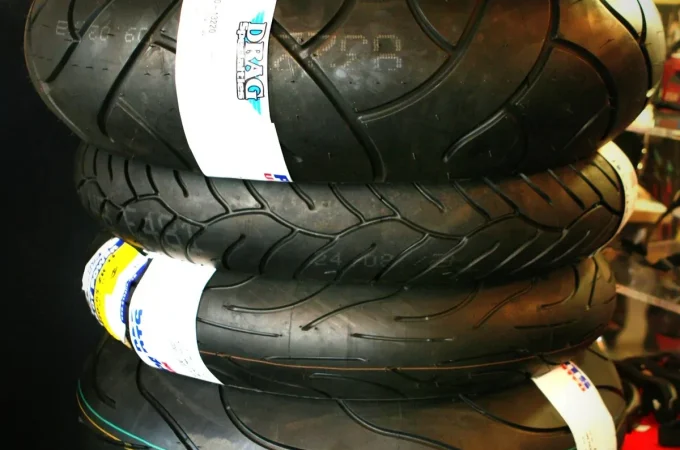
Check your tyres before the monsoon. The tread should be deep enough to push water away. If the tread is worn, the tyre will not grip well in rain. Check the tyre pressure as well. A tyre that is too soft or too hard will not handle well on a wet road. Check the manufacturer's page or the sticker on your bike for the correct pressure.
Check your brakes. The brake pads should not be worn out, and the brake lever should feel firm. If the brakes feel spongy, get them checked before you ride in rain. Check the lights too. The headlight, tail light, and indicators should all work, because other drivers need to see you.
Keep a small towel and a plastic bag in your bike's storage or in your bag. The towel is for wiping the visor and seat, and the bag is for keeping your phone dry. Put your phone in a waterproof pouch or a zip-lock bag before you ride.
What to do if you feel unsafe
If the rain becomes very heavy, or you cannot see clearly, pull over. Find a shelter, such as a petrol pump, a shop awning, or a bus stop, and wait. It is better to arrive late than to ride when you cannot see the road.
If you feel the bike sliding, do not panic and do not brake hard. Ease off the throttle gently, keep the bike upright, and let it slow down on its own. Look where you want to go, not at the thing you are trying to avoid.
If you are riding with a pillion, ask them to sit still and hold on. Sudden movements from a pillion can upset the bike, especially on a wet road. Tell them to lean with you in turns, and not to lean the other way.
Checklist
- Speed reduced by a third, gap increased to four seconds or more
- Braking early and gently, both brakes together
- Painted lines, manhole covers, and deep puddles avoided
- Raincoat, waterproof gloves, clear visor, bright colours, headlight on
- Tyres, brakes, and lights checked before the ride
- Phone in a waterproof pouch, small cloth for visor in pocket
- Pulled over if rain is too heavy to see clearly
Rain riding is a skill you build over time. Start slow, stay smooth, and give yourself more time than you think you need. The road will still be there when the rain stops. Your job is to get home safely.

Amelia Brooks
Editorial pen namePractical guides to phones, two-wheelers and gaming from the NewsHoxs desk. Read the bio & browse all stories ↗
See our coverage methodology or send a correction.