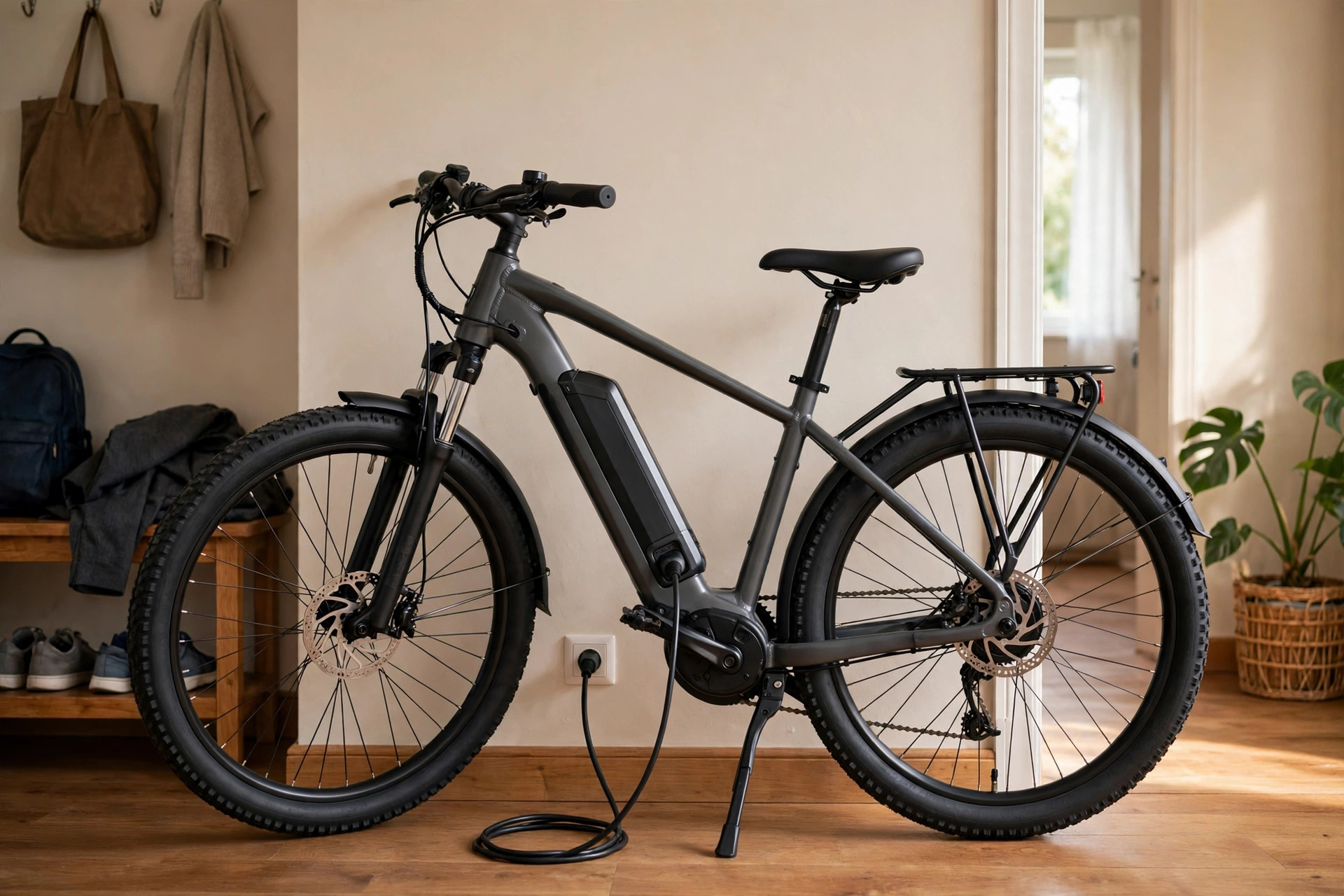
Charging an e-bike at home is a daily habit for most owners. You come home, plug it in, and expect it to be ready in the morning. Most of the time, it is that simple. The risk comes from the times we cut corners: using a charger that is not made for the bike, charging in a damp corner, leaving it plugged in for days, or ignoring a cable that is already damaged.
A battery is safe when it is charged the way the maker intended. That means the right charger, the right place, and a little attention while it charges. This guide covers the basics you can follow at home, without any special tools.
Use only the charger that came with your bike
Every e-bike battery has a charger made for it. The voltage, the connector, and the charging speed are matched to that battery. Using a charger from another bike, even if the plug fits, can overcharge the battery or charge it too fast. That can damage the battery and, in rare cases, cause it to overheat.
Check the label on your charger. It should match the battery details in your owner’s manual. If the charger is lost or damaged, buy a replacement from the bike maker or an authorised dealer. Do not buy a cheap, unbranded charger from a market stall just because it is cheaper. The saving is not worth the risk.
Keep the charger in a dry place, and do not wrap the cable tightly around it. A cable that is bent sharply every day can break inside, even if it looks fine outside. If the cable is frayed, the plug is loose, or the charger gets very hot, stop using it and get it checked.
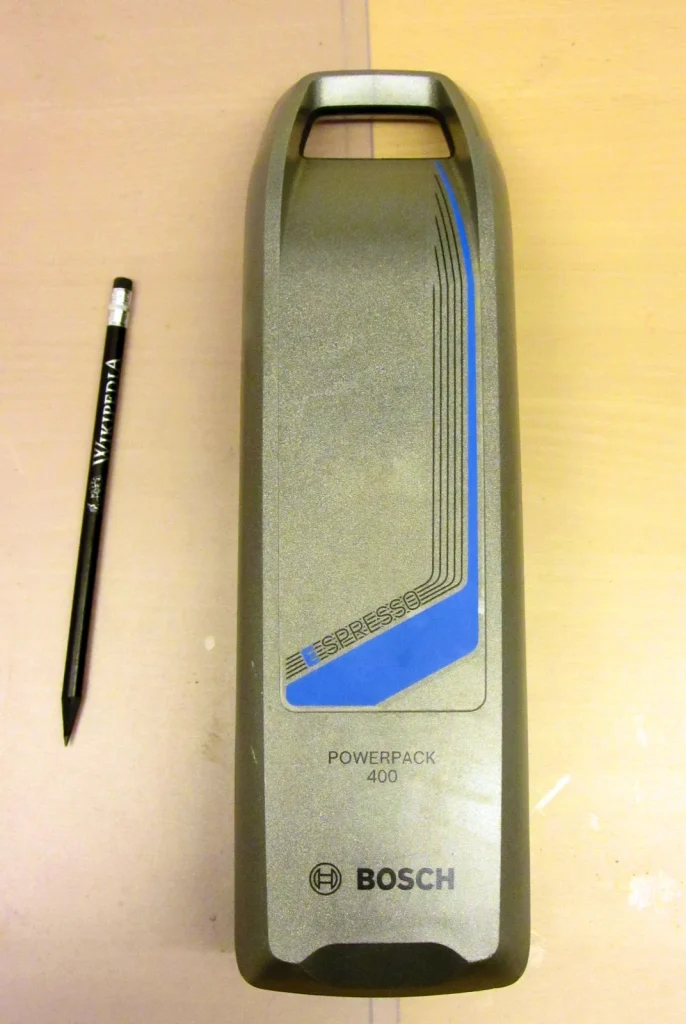
If your battery is removable, you can charge it off the bike. Follow the same rule: use the original charger, and charge the battery on a flat, stable surface. Do not charge a removable battery on a bed, a sofa, or a pile of clothes.
Pick a dry, ventilated spot
Charge in a place that is dry, well ventilated, and away from things that can catch fire. A garage, a parking area, or a room with good air flow is better than a closed, damp corner. Do not charge in a bathroom, or near a tap, or in a place where water can splash on the charger or the battery.
Keep the charging area clear. Do not put a cover, a cloth, or a bag over the battery or charger while it charges. They need air to stay cool. Keep petrol, paint, gas cylinders, and other flammable items away from the charging spot.
Do not charge on a soft surface. A battery and charger on a bed or a sofa can trap heat. Put them on a hard, flat surface, like a floor, a table, or a shelf made for the purpose. Make sure the bike is stable, and the cable is not stretched across a walkway where someone can trip on it.
If you live in a flat, check the building rules for charging. Some societies have a marked charging point, or a rule about where you can charge. Using the marked point is safer than running a long extension cable from your flat to the parking area.
Do not leave it charging for days
Most modern e-bikes stop charging when the battery is full, but that does not mean you should leave it plugged in for days. Unplug the charger when the battery is full, or when the indicator shows it is done. If you charge overnight, set a reminder to unplug it in the morning.
Avoid charging to 100 percent every single time if you do not need the full range that day. Many makers suggest keeping the battery between 20 and 80 percent for daily use, and charging to full only before a long ride. Check your owner’s manual for the exact advice for your bike, and follow that.
Do not charge a battery that is very hot from a ride. Let it cool down for 30 minutes after a ride before you plug it in. Do not charge a battery that is very cold either, if you have just brought it in from a cold place. Let it come to room temperature first.
If the battery feels very hot while charging, smells odd, or makes a hissing sound, unplug it at the wall, move away, and do not use it again until a mechanic has checked it. Do not try to open the battery yourself.
Store the charger and battery the right way
When you are not charging, keep the charger in a dry place, with the cable loosely coiled, not wound tight. A cable that is bent sharply every day can break inside, even if it looks fine from outside. Keep the plug clean and dry, and do not leave it on a damp floor.
If you have a removable battery, store it indoors in a dry, ventilated place, away from direct sun. Do not store it on a hot balcony, or next to a heater. Keep it at about half charge if you will not use it for a few weeks, and check it every few weeks, as per your manual.
Quick checklist
- Use only the original charger made for your bike and battery
- Charge in a dry, ventilated place on a hard, flat surface
- Keep the charger and battery uncovered, away from flammable items
- Unplug when charging is done — do not leave it plugged in for days
- Let the battery cool for 30 minutes after a ride before charging
- Check cables, plugs, and the battery case weekly for damage or swelling
- If the battery gets very hot, smells odd, or hisses, unplug and get help
- Follow the manual for the charge level to keep for daily use and for storage
Charging safely is mostly about not rushing it. Use the right charger, pick a good spot, and unplug when it is done. Those three habits cover most of the risk, and they take less than a minute each day.

Amelia Brooks
Editorial pen namePractical guides to phones, two-wheelers and gaming from the NewsHoxs desk. Read the bio & browse all stories ↗
See our coverage methodology or send a correction.