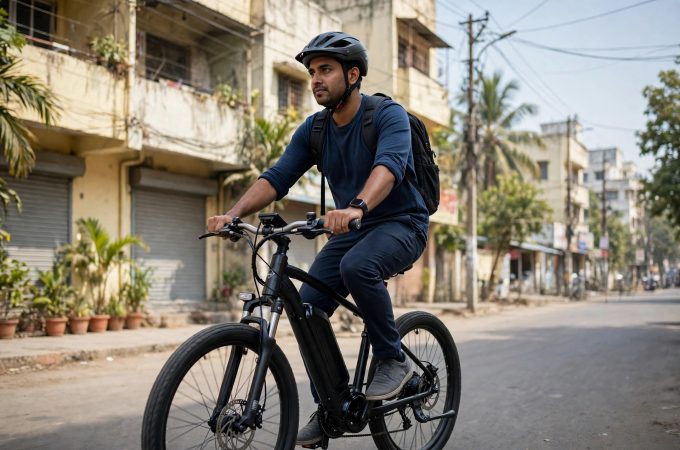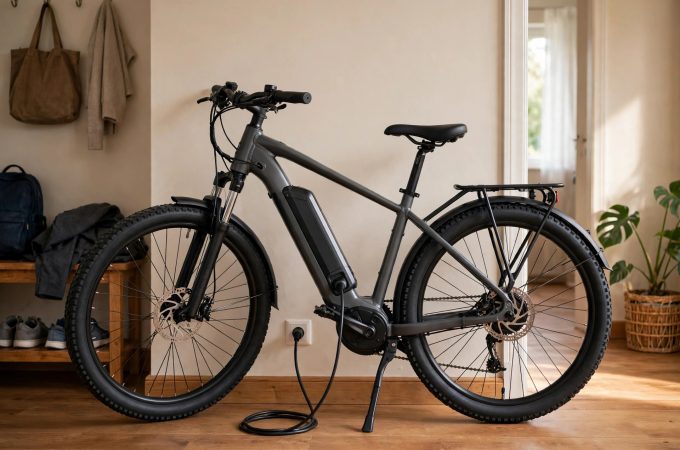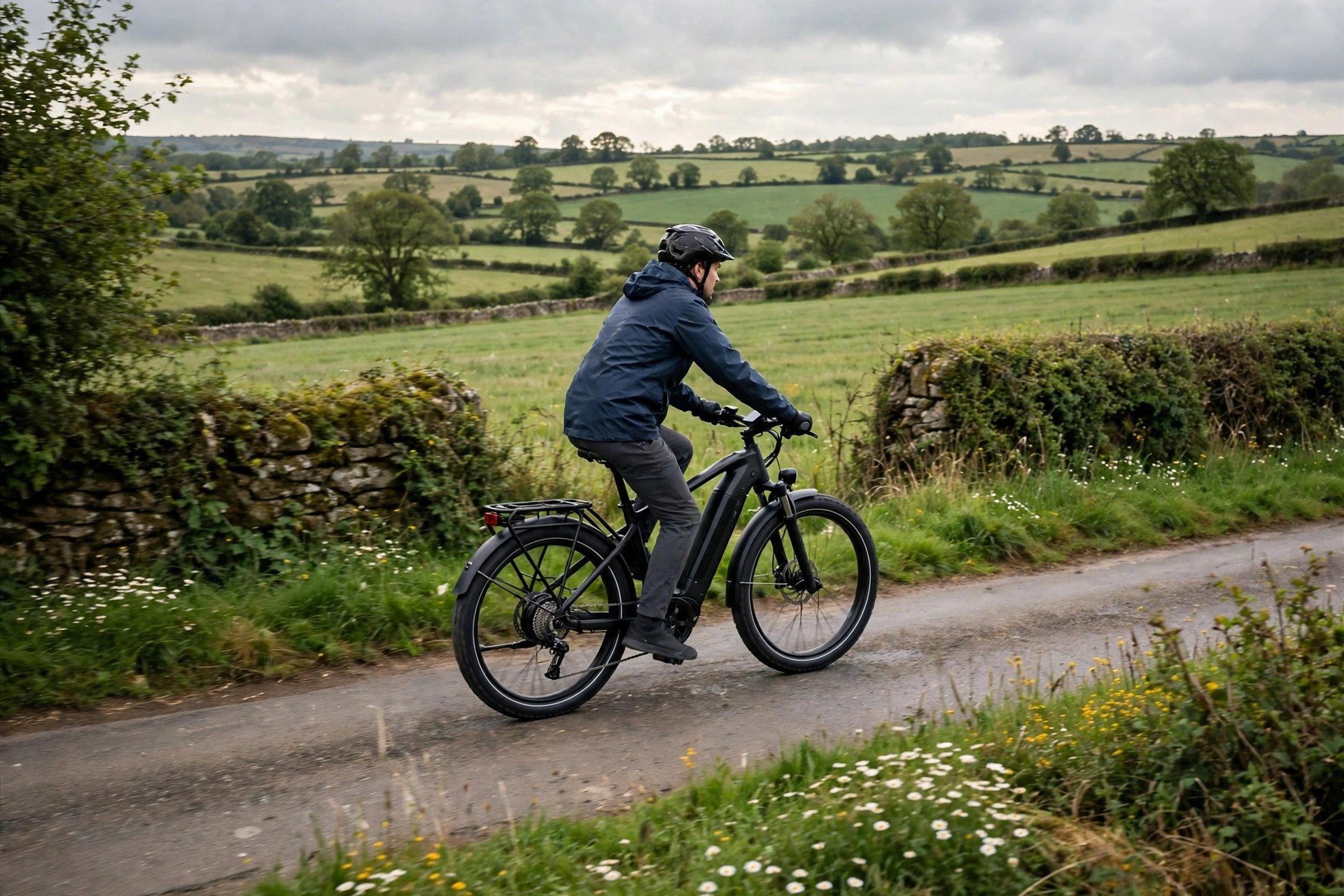
You buy an e-bike expecting a certain distance on one charge, and then your daily ride uses more battery than you thought. The range on a brochure is measured in ideal conditions: a light rider, flat roads, no wind, and a steady speed. Your real ride has traffic, slopes, a bag, and a headwind. That gap is normal, and you can close a lot of it with how you ride.
Getting more range is not about riding very slowly, or turning the motor off. It is about using the motor well, keeping the bike in good shape, and planning your ride so you do not waste power on stops and starts. Small changes add up to real kilometres.
Ride smoothly, not fast and slow
The motor uses the most power when you accelerate hard from a stop. If you pull away fast at every signal, then brake hard at the next one, you use a lot of battery for very little distance. A smooth start, a steady speed, and a gentle stop use far less.
Try to keep a steady pace. If you can see a signal ahead turning red, ease off early instead of riding fast and braking at the last moment. Let the bike roll. In traffic, a steady, moderate speed is better than bursts of speed followed by stops.
Use the gears if your e-bike has them. A low gear helps you start, and a higher gear helps you cruise. Pedalling in the right gear means the motor does not have to work as hard. If you are in too high a gear at a low speed, the motor strains, and the battery drains faster.
Avoid sudden changes in speed on a slope. Build up a little speed before a hill, if it is safe, and keep a steady effort up the slope. Stopping halfway up a steep slope and starting again uses more power than a steady climb.
Use the right assist level
Most e-bikes have different assist levels: eco, normal, and high, or a similar set. High assist feels good, but it uses the battery fast. Eco assist uses less, but you have to pedal more. The right level depends on the road.
Use eco or low assist on flat roads and in slow traffic. Use a higher level only when you need it: on a slope, against a strong wind, or when you are carrying a heavy load. Switching down on a flat stretch is the easiest way to save range.
Do not use the highest assist for the whole ride just because it is there. Try a lower level for a few days and see how it feels. Many riders find they can use eco for most of the commute, and save high assist for the one hill on the way home.
If your bike has a throttle, use it sparingly. A throttle uses the motor without pedalling, and that drains the battery fast. Use it to start from a stop, or to get through a tricky spot, and then go back to pedalling.
Keep the bike in good shape
Tyres make a big difference. A tyre with low pressure has more rolling resistance, which means the motor has to work harder. Check the pressure every week, and pump it to the number on the tyre or in the manual. A tyre that is too soft can cost you several kilometres of range.
Keep the chain clean and oiled, if your bike has one. A dry, dirty chain wastes power. A clean chain lets the pedals and motor work smoothly. Check the brakes too. A brake that rubs lightly all the time will slow the bike down, and the motor will use more power to keep the same speed.
Carry less weight when you can. A heavy bag, a lock, and a lot of extra items add up. If you carry a heavy lock every day, ask if you need it on that ride, or if a lighter lock will do. Every kilo you remove helps, especially on slopes.
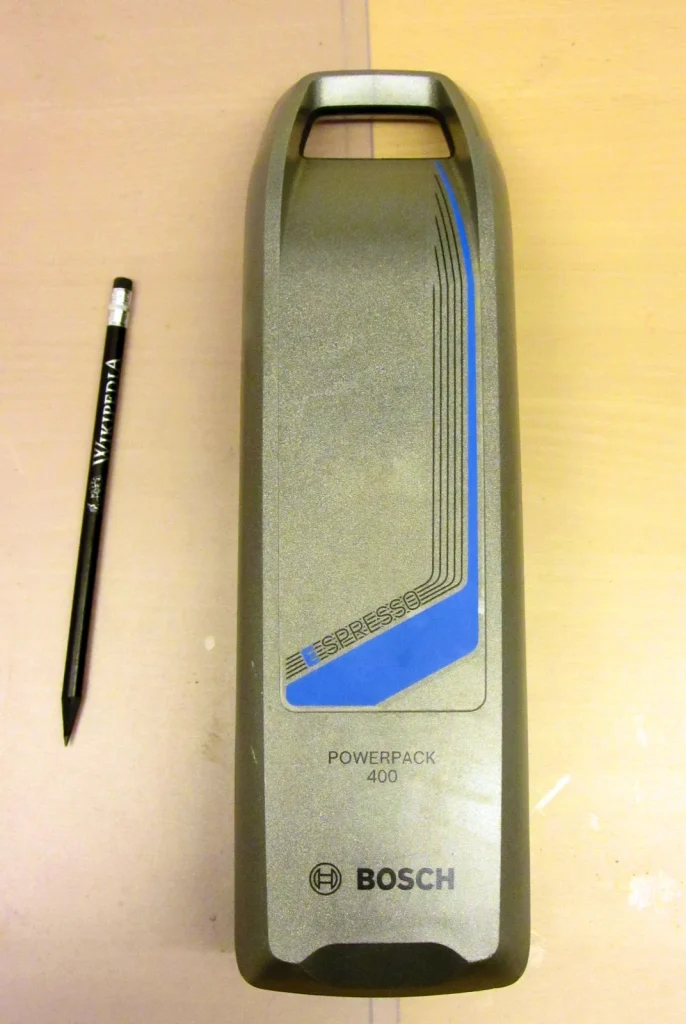
Check the battery age and health. An old battery will not give the same range as a new one, even if you ride perfectly. If your range has dropped a lot in a short time, get the battery checked by the dealer. It may need a check, not a new riding style.
Keep a simple range log for a week
You do not need an app to learn your real range. For one week, note the battery level when you leave home, and when you get back. Note the route, the assist level, and whether it was windy or rainy. After a few days, a pattern will show up.
You might find that one route uses 20 percent, and another uses 35 percent for the same distance. You might find that high assist on a flat road costs you more than you thought, or that a headwind on Friday uses far more than a calm Monday. That log is more useful than a brochure number, because it is based on your ride, your weight, and your roads.
Use what you learn. If a route uses too much, try a different road, a lower assist level, or a lighter bag. If your range is falling week by week, check the tyres and the battery, and ask a mechanic to look at it. A small change in how you ride, based on real numbers, is worth more than guessing.
Quick checklist
- Start smoothly, keep a steady speed, and ease off before signals
- Use eco or low assist on flat roads, and high assist only on slopes or with a heavy load
- Use the throttle sparingly, and pedal in the right gear
- Check tyre pressure weekly, and keep the chain clean and brakes free
- Carry less weight when you can, and remove items you do not need that day
- Pick a flatter, smoother route with fewer stops, even if it is slightly longer
- Save some battery for a headwind on the way back, and charge fully before a long ride
Real range comes from how you ride, not from a number on a brochure. Ride smoothly, use the right assist, keep the bike in shape, and pick a good route. Do those four things for a week, and you will see the difference in how much battery is left when you get home.

Amelia Brooks
Editorial pen namePractical guides to phones, two-wheelers and gaming from the NewsHoxs desk. Read the bio & browse all stories ↗
See our coverage methodology or send a correction.