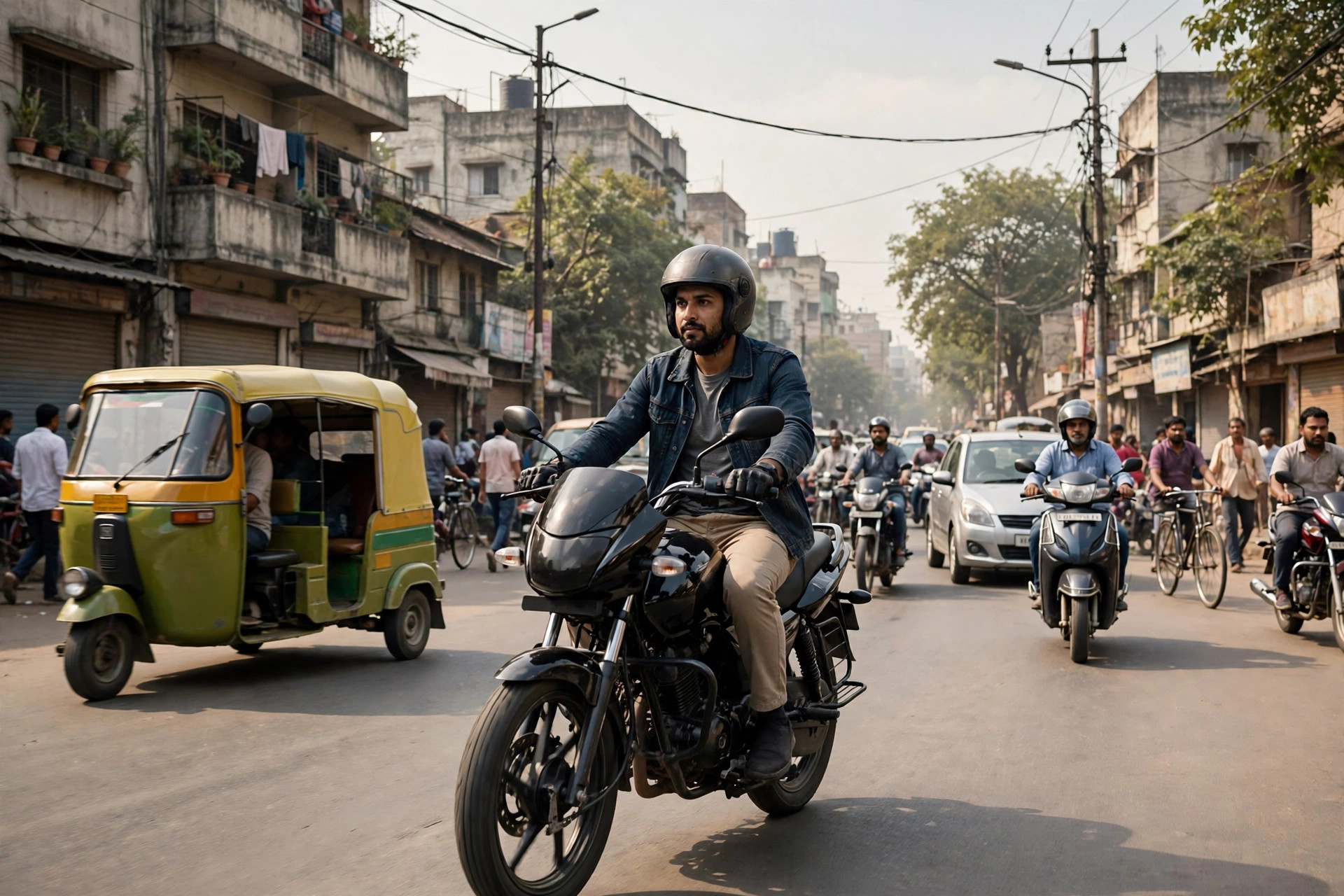
City traffic is hard on mileage. You stop at every signal, wait in jams, and move in short bursts. A bike that gives good mileage on a highway can give much less in the city. That is normal, but there are habits and checks that can make a real difference. I have tried these on my own commute, and the change was not dramatic in one day, but it added up over a month.
The aim is not to ride slowly all the time. It is to ride smoothly, keep the bike in good shape, and avoid the habits that waste fuel without you noticing.
Ride smoothly, not fast and then slow
The biggest waste of fuel in city traffic is sudden acceleration and sudden braking. When you accelerate hard from a signal, the engine uses a lot of fuel. When you brake hard a few seconds later, that energy is lost. A smooth rider uses less fuel and arrives at almost the same time.
Try this: when a signal turns green, accelerate gently and steadily. Do not race to the next signal. Look ahead and see if the next signal is red. If it is, ease off the throttle early and let the bike slow down on its own. You will still reach the signal, but you will use less fuel and less brake.
Keep a steady speed where you can. In city traffic, that usually means 30 to 40 kmph on main roads, and slower in narrow lanes. Do not keep changing speed for no reason. A steady speed is better for mileage than a speed that goes up and down.
Use the right gear. Riding in a low gear at high speed wastes fuel, and riding in a high gear at very low speed makes the engine struggle. Shift up when the engine sounds smooth, and shift down before the engine starts to shake. If you are not sure, listen to the engine. It will tell you when it wants a different gear.
Avoid idling for a long time. If you are stopped at a signal for more than a minute, and you know it will be a long wait, switch off the engine. Many signals in Indian cities last 60 to 90 seconds. Switching off for that time saves fuel, and it also reduces pollution. Start the bike again when the signal is about to turn green.
Keep tyre pressure and the bike in good shape
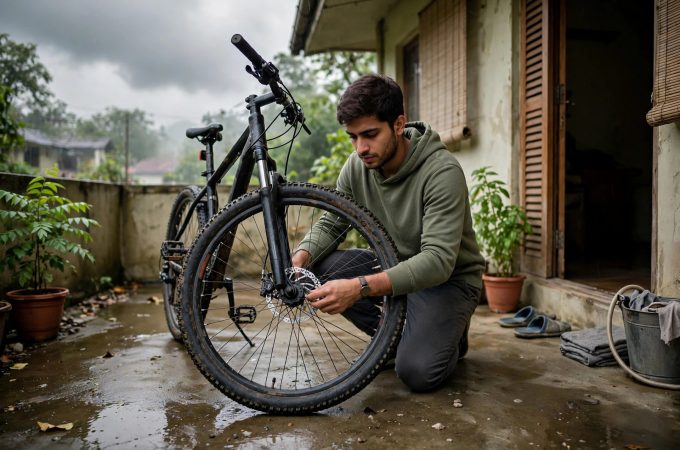
Tyre pressure is one of the easiest checks, and one of the most ignored. A tyre that is low on air makes the bike harder to move, and the engine has to work harder. That uses more fuel. Check the pressure once a week, when the tyres are cold, and use the number in your bike's manual or on the sticker on the bike.
Check the air filter regularly. In Indian cities, dust can clog the filter in a few months. A clogged filter means the engine does not get enough air, and it uses more fuel. Clean the filter if it is a cleanable type, or replace it if it is a paper filter. Check your bike maker's page for how often to do this.
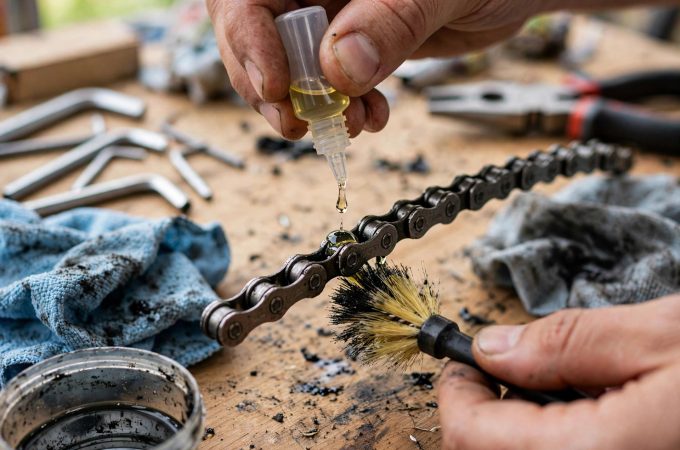
Check the chain. A dry or tight chain makes the bike less efficient. Clean and oil the chain every few weeks, and check the slack. A chain that is in good shape lets the power reach the wheel without waste.
Use the right engine oil, and change it on time. Old oil makes the engine work harder. Check the manual for the grade of oil and the change interval. Do not use a thicker oil than the manual recommends, because it can reduce mileage.
Check the spark plug if your bike is older. A worn spark plug can cause the engine to misfire and use more fuel. A mechanic can check it in a few minutes during a service.
Reduce weight and drag
Extra weight uses extra fuel. If you carry a heavy bag, a toolbox, or things you do not need, remove them. A top box is useful, but it also adds weight and wind resistance. If you do not need it every day, take it off.
Check if the brakes are dragging. If the bike feels heavy to push when it is in neutral, or if the wheels feel hot after a short ride, the brakes may be dragging. Get them checked. Dragging brakes waste fuel and wear out the pads faster.
Keep the bike clean. Dirt on the bike does not affect mileage much, but a clean bike is easier to check for problems. Look for leaks, loose parts, and worn tyres when you wash the bike.
Plan your route. A slightly longer route with fewer signals and less traffic can use less fuel than a short route through a jam. If you know a road is always blocked at 9 am, try a different road. Use a maps app to check traffic before you leave, and leave five minutes earlier if you can. A calm ride uses less fuel than a rushed ride.
Track your mileage the simple way
You cannot improve what you do not measure. Use the simple method: fill the tank to full, note the reading on the odometer, ride normally, and fill the tank to full again after a few days. Note how many litres you filled, and how many kilometres you rode. Divide kilometres by litres to get your mileage.
Do this for two or three tanks, and take the average. That is your real city mileage. If you change a habit, such as switching off at long signals, do the same test again and see if the number improves. A change of 2 to 3 km per litre is a good result in city traffic.
Do not trust the mileage figure on the dashboard alone, if your bike has one. It is an estimate, and it can be optimistic. The tank-to-tank method is more accurate.
Keep a small notebook or a note on your phone with the dates, litres, and kilometres. Over a month, you will see a pattern. If mileage suddenly drops, it is a sign that something needs attention: tyre pressure, air filter, chain, or a service.
Checklist
- Accelerate gently, look ahead, ease off early at red signals
- Right gear for the speed, engine off at signals longer than a minute
- Tyre pressure checked weekly, air filter and chain checked regularly
- Engine oil changed on time, spark plug checked during service
- Extra weight removed, brakes checked for dragging
- Mileage tracked tank to tank, average noted over two or three tanks
Improving mileage in city traffic is not about one big change. It is about small habits, done every day, and a bike that is looked after. Ride smoothly, keep the bike in good shape, and track what you get. Over a month, the savings will show up in your fuel bill, and the bike will feel better to ride too.

Amelia Brooks
Editorial pen namePractical guides to phones, two-wheelers and gaming from the NewsHoxs desk. Read the bio & browse all stories ↗
See our coverage methodology or send a correction.