Every year in India, the first heavy rain catches someone by surprise. A bike that worked fine in summer suddenly has weak brakes, worn tyres, and a light that does not work. The rider finds out in the rain, at night, on a busy road. That is the worst time to find out.
A pre-monsoon check takes about an hour, and it can be done at home or at a trusted mechanic. Do it in May or early June, before the rains start. The aim is simple: make sure the parts that matter most in rain are in good shape.
Start with tyres and brakes
Tyres are the most important part in rain. They are the only part of the bike that touches the road. Check the tread depth. You can use a coin to check it: place a coin in the tread, and if the tread is shallower than the coin's edge, the tyre is worn. Or use a tread depth gauge if you have one. If the tread is low, replace the tyre before the monsoon. A worn tyre cannot push water away, and it will slide more easily.
Check the tyre pressure. A tyre that is too soft will feel heavy and will not handle well. A tyre that is too hard will have less grip. Check the pressure when the tyres are cold, in the morning, and use the number on the sticker on your bike or in the manual. Do not guess.
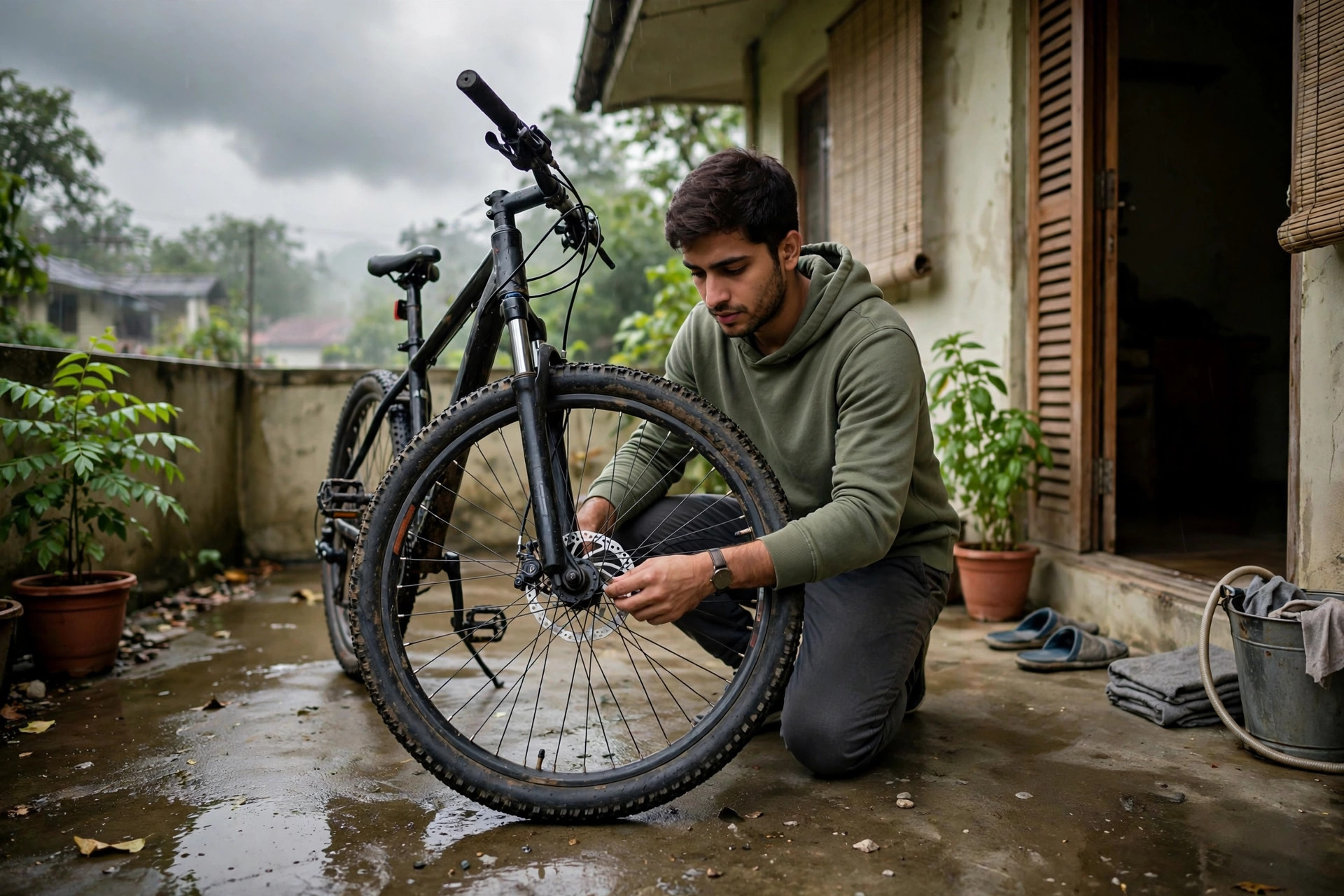
Check the brakes next. Squeeze the front brake lever and press the rear brake pedal. They should feel firm, not spongy. If the lever goes too close to the handlebar, or the pedal feels soft, the brakes need attention. Check the brake pads. If they are thin, replace them. In rain, you need brakes that work the first time you use them.
If your bike has ABS, check that the ABS light turns off after you start the bike. If it stays on, get it checked. ABS helps in rain, but only if it is working.
Check lights, battery, and electrical parts
Rain and darkness go together. Check the headlight, tail light, brake light, and indicators. Turn each one on and ask someone to check from behind, or check in a mirror. Replace any bulb that is dim or not working. Clean the headlight lens, because a dirty lens gives less light.
Check the battery. If the bike is slow to start, or the lights dim when you start it, the battery may be weak. Clean the battery terminals if they have white or green deposits on them. Use a brush and a little water, and dry them well. If the battery is more than three years old, get it tested at a shop.
Check the horn. It should be loud enough to be heard in traffic. In rain, other drivers may not see you, so the horn matters more. If the horn sounds weak, get it checked.
Check the wiring and connectors if you can. Look for loose wires, cracked insulation, or water damage. If you see a wire that is exposed, get it fixed. Water and exposed wires do not mix well.
Look at the chain, suspension, and leaks
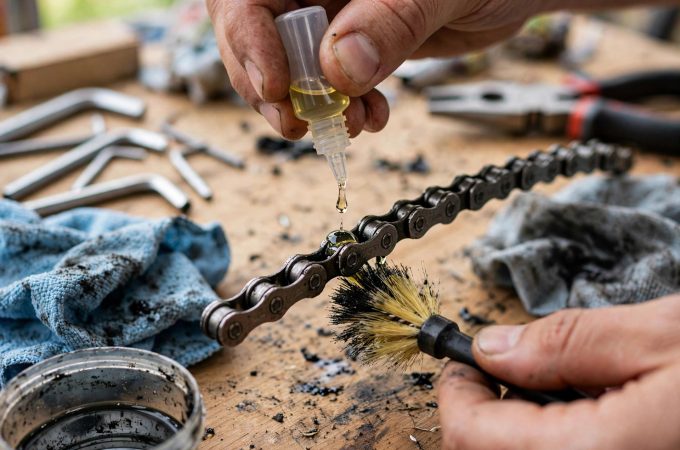
Clean and oil the chain before the monsoon. Rain washes oil off the chain quickly, so start the season with a clean, well-oiled chain. Check the slack as well, and adjust it if you know how. A chain that is too loose can jump in wet conditions.
Check the suspension. Push down on the front of the bike and let go. It should go up and come back smoothly, without bouncing too much. Do the same at the back. If the bike bounces a lot, or if you see oil leaking from the forks, get the suspension checked.
Look under the bike for leaks. Check for oil, coolant, or fuel leaks. A small leak in summer can become a bigger problem in rain, because water can get into the parts that are leaking. If you see a puddle under the bike in the morning, find out what it is before you ride.
Check the air filter if you can. A dirty air filter makes the bike use more fuel and run roughly. In dusty summer months, the filter can get clogged. Clean or replace it before the monsoon.
Prepare your rain gear and storage
Buy rain gear before the monsoon, not during the first rain. A good raincoat, waterproof gloves, and a pair of waterproof shoe covers make a big difference. Try the raincoat on with your helmet and jacket, and make sure it fits. A raincoat that is too tight will tear, and one that is too loose will flap in the wind.
Keep a small bag in your bike's storage for rain items: a microfibre cloth for the visor, a plastic bag for your phone, and a small towel for the seat. Put your phone in a waterproof pouch before you ride, not after it starts raining.
If your bike has a storage box, check that it closes properly and does not let water in. If it leaks, put your things in a plastic bag inside the box. Check the seat as well. If the seat is torn, water can get into the foam and make the seat wet for a long time.
Plan for the first rain ride
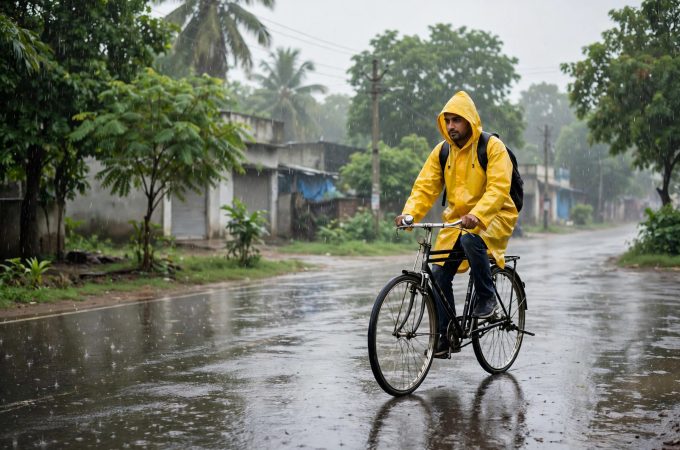
The first rain after a long dry spell is the most dangerous. Oil and dust on the road mix with water and make it slippery. If you can, avoid riding in the first rain. Wait for a few hours, or wait until the next day, when the road has been washed clean.
If you must ride, slow down, leave more space, and avoid painted lines and manhole covers. Brake gently and early. Keep your visor clean, and turn on your headlight even in the daytime.
After the first rain ride, wash the bike. Rain water can leave dirt and salt on the bike, which can cause rust. Pay attention to the chain, brakes, and metal parts. Dry the bike with a cloth, and oil the chain again if it looks dry.
Checklist
- Tyres checked for tread and pressure, brakes firm and pads not worn
- Headlight, tail light, brake light, indicators, and horn all working
- Battery tested, terminals clean, wiring checked for damage
- Chain cleaned and oiled, suspension checked, no leaks under the bike
- Raincoat, gloves, shoe covers, visor cloth, and phone pouch ready
- First rain avoided if possible, bike washed and dried after a rain ride
A pre-monsoon check is not a big job, but it is an important one. Do it once, do it properly, and the monsoon will be much easier to ride through. The bike will be ready, and so will you.

Amelia Brooks
Editorial pen namePractical guides to phones, two-wheelers and gaming from the NewsHoxs desk. Read the bio & browse all stories ↗
See our coverage methodology or send a correction.