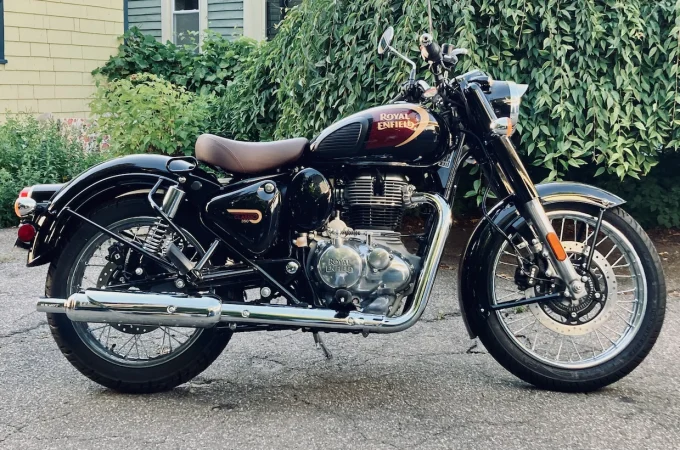
The chain is one of the hardest-working parts of a bike, and one of the most ignored. It carries power from the engine to the rear wheel, and it does that in dust, rain, and heat. In Indian city traffic, a chain can get dry and dirty in a few weeks. When that happens, the bike feels rough, the mileage drops a little, and the chain and sprockets wear out faster.
You do not need a workshop to look after a chain. With a few basic tools, a stand, and half an hour every few weeks, you can keep it clean and in good shape. I do this on a Sunday morning, when the bike is cool and I have time to do it properly.
Know what a healthy chain looks like
A healthy chain is clean, lightly oiled, and has the right amount of slack. Slack is the up-and-down movement of the chain when you push it in the middle. Too much slack means the chain is loose and can jump. Too little slack means the chain is too tight and puts pressure on the sprockets and bearings.
Check your bike's manual or the sticker on the swingarm for the correct slack. For many bikes in India, the slack is about 20 to 30 millimetres, but it varies by model. Check your bike maker's page or manual for the exact number for your bike.
Look at the chain links. They should move freely, and the chain should not have rust, stiff links, or missing O-rings. The sprocket teeth should be even, not hooked or pointed. If the teeth look like shark fins, the sprocket is worn and needs to be replaced.
A chain that makes a loud noise, or that feels jerky when you ride, is telling you it needs attention. Do not ignore it. A dry chain wears out much faster than a clean, oiled one.
Clean the chain before you oil it
Do not oil a dirty chain. Oil on top of dirt makes a sticky paste that wears the chain faster. Clean it first.
Put the bike on its centre stand, or on a paddock stand if you have one. If you do not have a stand, ask a friend to hold the bike upright while you work. Never work on a chain while the engine is running. That is dangerous, and many injuries happen that way.
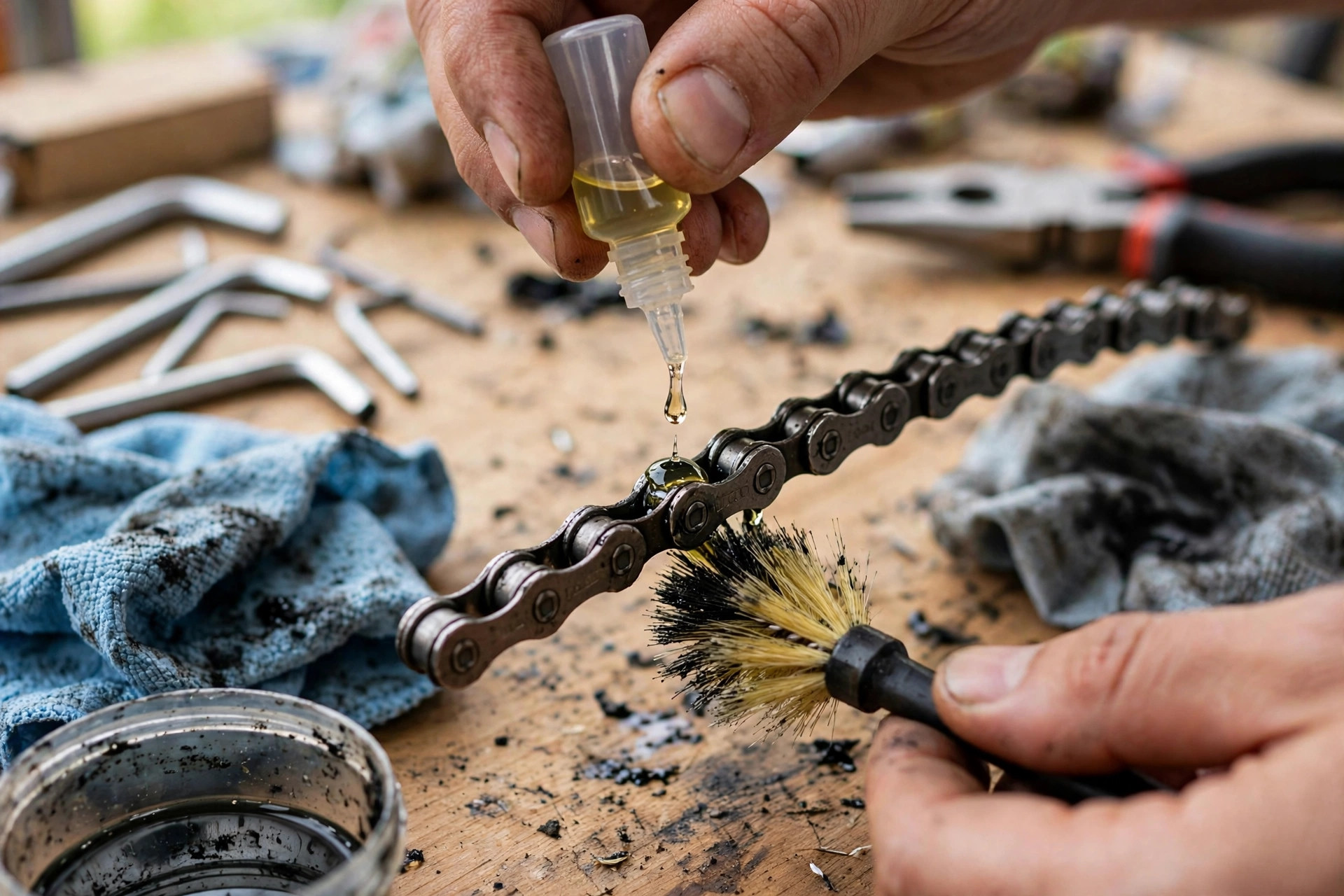
Spray a chain cleaner on the chain, or use kerosene on a cloth. Many mechanics in India use kerosene, and it works well for cleaning. Do not use petrol, because it can damage the O-rings. Do not use a high-pressure water jet on the chain, because it can push dirt into the links.
Use a soft brush, such as an old toothbrush or a chain brush, to clean between the links. Turn the rear wheel slowly by hand, and clean a small section at a time. Wipe the chain with a clean cloth, and let it dry for a few minutes. The chain should look clean and dry before you oil it.
Lubricate the chain the right way
Use a chain lubricant made for bikes, not engine oil or grease from the kitchen. Chain lube is made to stay on the chain at speed, and it does not fling off as easily. You can buy a spray can from a bike shop or online. Choose a lube that suits your riding: a dry lube for dusty roads, or a wet lube for rainy weather.
Hold the spray can about 15 centimetres from the chain, and spray the inside of the chain, the part that touches the sprocket. Turn the rear wheel slowly by hand and spray a small section at a time. Do not spray too much. A thin, even coat is enough. If you spray too much, it will fling off onto the rear wheel and tyre, which is dangerous.
Let the lube sit for ten minutes before you ride. This gives it time to settle into the links. Wipe off any extra lube from the outside of the chain with a cloth. The chain should feel lightly oiled, not wet and dripping.
How often should you do this? For most city riding in India, clean and oil the chain every 500 to 800 kilometres, or every two to three weeks. Do it more often if you ride in rain or on dusty roads. After a ride in rain, clean and oil the chain the same day if you can.
Check and adjust the slack
To check slack, find the middle point between the front and rear sprockets. Push the chain up and down with your finger, and measure how far it moves. If it moves more than the number in your manual, the chain is loose. If it moves less, it is too tight.
To adjust slack, you need to loosen the rear axle nut and turn the adjusters on both sides of the swingarm by the same amount. This is a job that needs care, because the rear wheel must stay straight. If the wheel is not straight, the chain will wear unevenly and the bike will not handle well.
If you have never done this before, watch a mechanic do it once, or ask a friend who knows how to do it. It is not hard, but it is important to get it right. After you adjust the slack, tighten the axle nut to the correct torque, and check the slack again.
If the chain is at the end of its adjustment, or if you have adjusted it several times, it may be worn out. A worn chain stretches over time, and it will not hold the correct slack. In that case, replace the chain and sprockets together. Replacing only the chain on a worn sprocket will wear out the new chain quickly.
Spot problems early
Check the chain every time you wash the bike. Look for rust, stiff links, and missing O-rings. A stiff link is a link that does not bend freely. It will make a clicking sound when you ride, and it can cause the chain to jump.
Checklist
- Bike on centre stand, engine off, chain cool
- Chain cleaned with chain cleaner or kerosene, no petrol or pressure washer
- Chain dried, then lubricated lightly on the inside, excess wiped off
- Slack checked against manual, adjusted only if you know how
- Sprocket teeth checked for wear, stiff links and rust looked for
- Chain cleaned and oiled every 500 to 800 km, more often in rain or dust
A clean chain makes the bike feel smoother, quieter, and easier to ride. It also lasts longer, which saves money. Spend half an hour on it every few weeks, and the chain will look after you on the road.

Amelia Brooks
Editorial pen namePractical guides to phones, two-wheelers and gaming from the NewsHoxs desk. Read the bio & browse all stories ↗
See our coverage methodology or send a correction.