A helmet is the most important piece of safety gear on a bike. It is also the piece most people buy wrong. They pick a helmet because it looks good, or because it is cheap, or because it is the same size as a friend's helmet. Then they ride with a helmet that is too loose, too tight, or too heavy, and they end up not wearing it as often as they should.
A good helmet should fit snugly, feel comfortable for an hour, and stay in place when you shake your head. It should not press on your forehead, and it should not slide around. Finding that fit takes about fifteen minutes in a shop, and it is worth every minute.
Measure your head before you go to the shop
Start at home. Take a soft measuring tape, the kind used for tailoring, and wrap it around your head, about two centimetres above your eyebrows and ears. That is the widest part of your head. Write down the number in centimetres.
Use that number to find your size. Most helmets in India use a size chart like this: small is about 55 to 56 cm, medium is 57 to 58 cm, large is 59 to 60 cm, and extra large is 61 to 62 cm. These numbers vary by brand, so check the chart for the brand you are buying. A medium in one brand can feel like a large in another.
Measure twice, and measure in the morning if you can. Your head size does not change during the day, but the tape can slip if you are in a hurry. If your measurement is between two sizes, try both. The right size is the one that feels snug without hurting.
Check the certification and build
In India, look for the ISI mark on the helmet. The ISI mark is a sign that the helmet has been tested to the Indian standard. The mark should be on the back of the helmet, and it should be clear and not a sticker that peels off easily. Check the helmet maker's page for what the mark should look like.
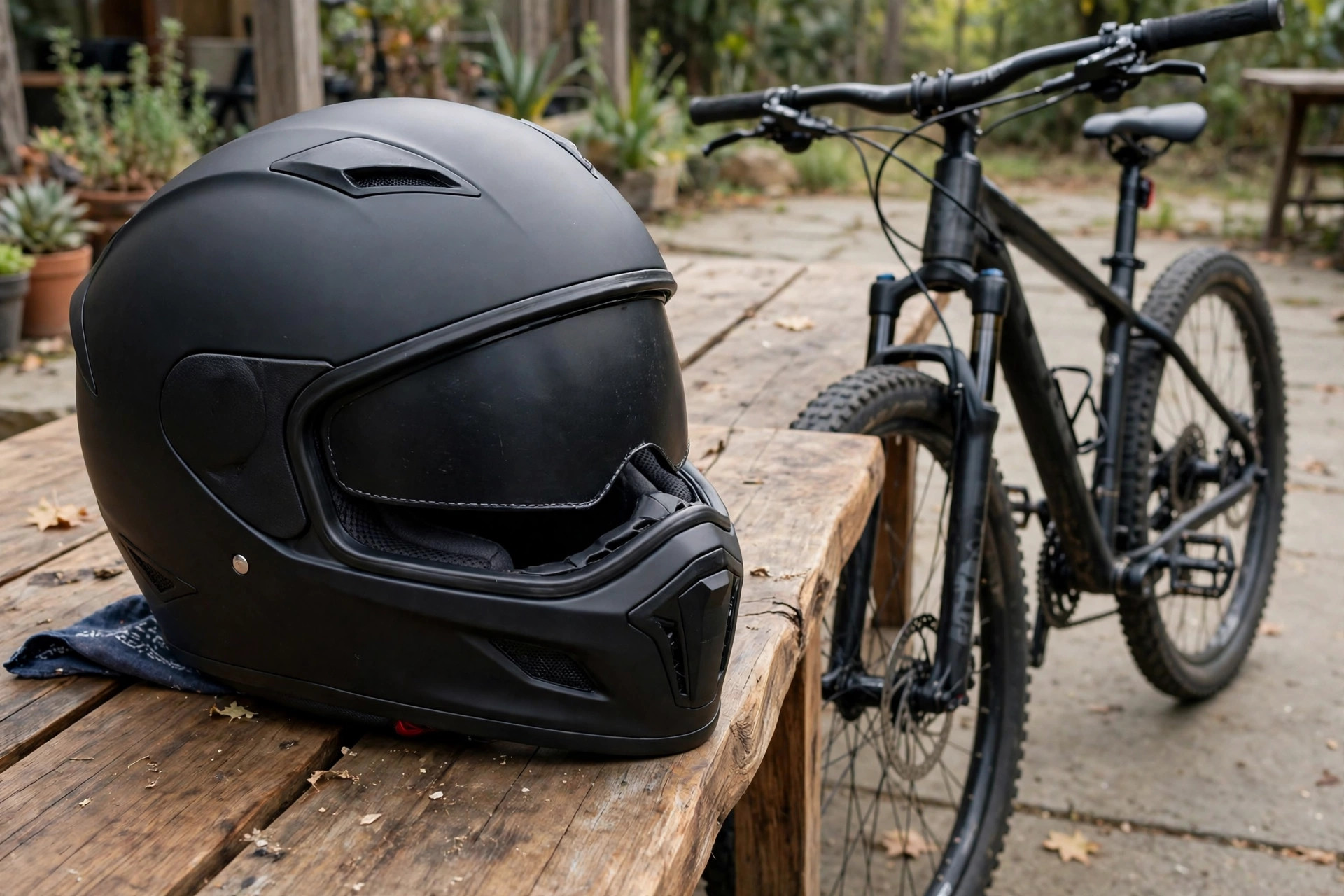
Also check the shell. It should feel solid, not thin or flexible. The inner lining should be thick and soft, and it should be removable so you can wash it. The visor should be clear and free of scratches, and it should open and close smoothly. The chin strap should be strong, and the buckle should lock firmly.
Avoid helmets that are very light and very cheap, with no brand name and no ISI mark. They may look like a helmet, but they do not offer the same protection. A helmet is not the place to save a few hundred rupees.
Full-face helmets offer more protection than open-face helmets, because they cover the chin and jaw. If you ride in the city, a full-face helmet is a better choice. If you ride slowly and only for short distances, an open-face helmet is better than no helmet, but it does not protect the face.
Try it on properly in the shop
When you try a helmet on, put it on and fasten the chin strap. The strap should be snug, with room for two fingers between the strap and your chin. If you can fit more than two fingers, the strap is too loose. If you cannot fit one finger, it is too tight.
Shake your head from side to side and up and down. The helmet should move with your head, not slide around on its own. If it slides, it is too big. If it feels like it is squeezing your head, it is too small.
Wear the helmet for at least ten minutes in the shop. Walk around, look in a mirror, and check for pressure points. A helmet that feels fine for thirty seconds can become painful after ten minutes, especially on the forehead. If you feel a sharp pressure on your forehead, try a different shape. Helmets come in different shapes: round, oval, and long oval. Your head shape matters as much as your head size.
Check the view. You should be able to see clearly to the sides without turning your head too much. The visor should not distort your view. Look up and down, and make sure the helmet does not block your view of the road or the mirrors.
Think about comfort for Indian weather
India is hot, and a helmet can become very warm. Look for a helmet with vents on the top and at the front. The vents should open and close easily, and they should let air in when you ride. A helmet with no vents will be very uncomfortable in summer.
The inner lining should be made of a material that absorbs sweat and can be washed. If the lining is not removable, it will start to smell after a few weeks. Ask the shop if the lining can be removed and washed.
The weight of the helmet matters too. A heavy helmet can cause neck pain on a long ride. Hold the helmet in your hand and check its weight. A good full-face helmet for city riding should feel balanced, not heavy at the front. If you ride long distances, a lighter helmet is worth paying a little more for.
Care for the helmet after you buy it
Do not drop your helmet. A drop from a height can damage the inner foam, even if the shell looks fine. If you drop it hard, or if you have a crash, replace the helmet. A helmet is made to absorb one impact, not two.
Clean the visor with a soft cloth and water. Do not use a rough cloth or a chemical cleaner, because it can scratch the visor. Wash the inner lining regularly, and let it dry completely before you put it back.
Checklist
- Head measured, size checked against the brand's chart
- ISI mark checked, shell solid, lining thick and removable
- Chin strap snug, two fingers fit, buckle locks firmly
- Helmet tried for ten minutes, no pressure points, view clear to the sides
- Vents work, weight feels balanced, visor clear and scratch-free
- Helmet stored safely, lining washed regularly, replaced after a crash or after a few years
A helmet that fits well is a helmet you will wear every time. Do not rush the shop visit. Try two or three sizes, walk around in the helmet, and choose the one that feels snug and comfortable. Your head is worth the extra fifteen minutes.

Amelia Brooks
Editorial pen namePractical guides to phones, two-wheelers and gaming from the NewsHoxs desk. Read the bio & browse all stories ↗
See our coverage methodology or send a correction.