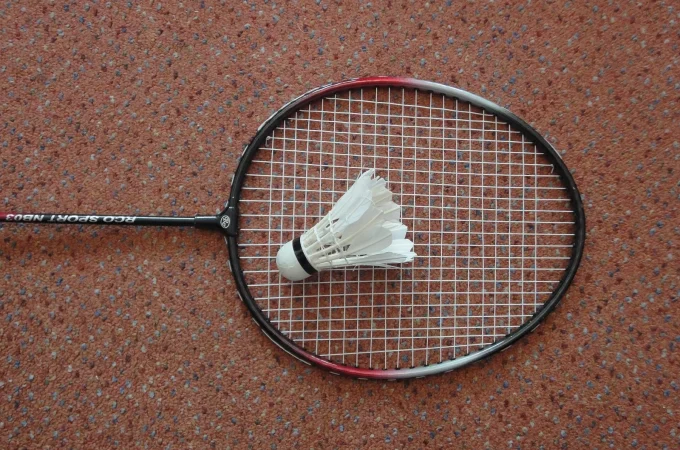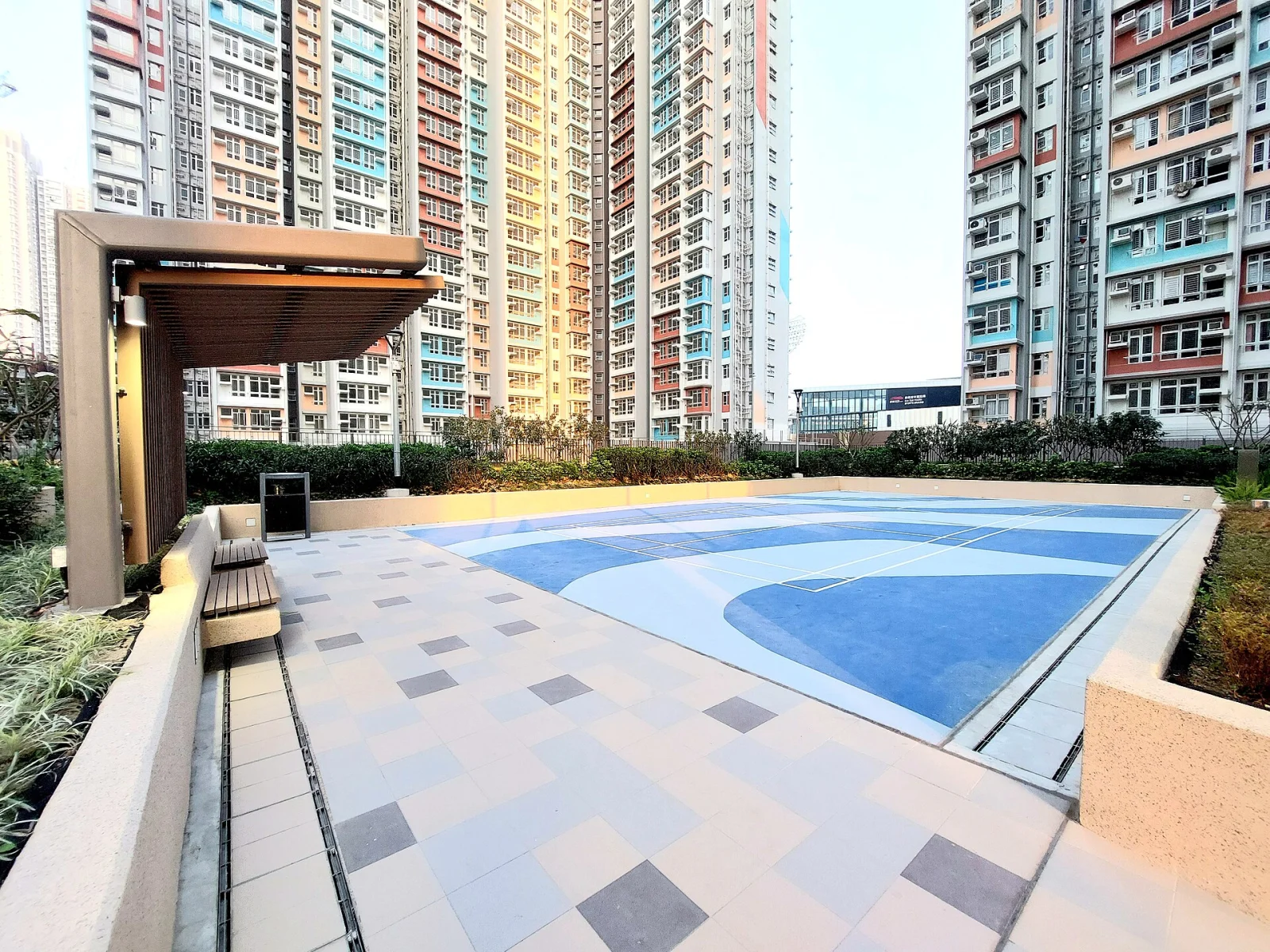
The most confusing badminton line is often the one that counts for a doubles serve but stops being the rear boundary once the rally develops. Learn to separate service from the rally, then separate singles from doubles. The markings become much easier to read.
This guide covers ordinary full-court singles and doubles. A modified event or Para-badminton format may use different court arrangements, so begin with the format being played.
Identify the lines before starting
Find the two sidelines on each side, the short service line near the net and the two rear lines. Singles uses the inner sidelines; doubles uses the outer sidelines. Both use the full back boundary during ordinary rallies.
Service introduces a different rear limit in doubles. Its long service line sits inside the full back boundary, creating a service box that is wider but shorter than the singles service box. A serve must go to the diagonally opposite service court.
| Situation | Side boundary | Rear boundary |
|---|---|---|
| Singles serve | Inner singles sideline | Full back boundary |
| Singles rally | Inner singles sideline | Full back boundary |
| Doubles serve | Outer doubles sideline | Doubles long service line inside the back boundary |
| Doubles rally | Outer doubles sideline | Full back boundary |
The BWF laws treat the lines as part of the area they define. First identify the correct area, then decide whether the shuttle landed on or beyond its boundary. Calling a shot “on the line” is not enough if it is the wrong line for that phase of play.
Two situations that look contradictory
A deep doubles serve: imagine the shuttle lands in the strip between the doubles long service line and the full back boundary. That strip is beyond the valid service box, so the serve is out.
A deep doubles shot after the return: imagine the shuttle lands in the same strip during the rally. It can be in, provided it remains inside the correct side and back boundaries. The landing place did not move; the phase of play changed.
When practising the distinction, point out that rear strip before the game. It is easier to agree which line applies while everyone is stationary than while trying to remember a fast landing.
Right or left: use the serving side’s score
The serving side uses the right service court when its score is zero or even, and the left when its score is odd. Count that side’s score rather than adding the two teams’ totals. The receiver stands diagonally opposite.
| Serving side score | Service court | What to remember |
|---|---|---|
| 0 | Right | Zero follows the even-score pattern |
| 6 | Right | The opponent’s score does not choose the court |
| 7 | Left | Odd score means left |
Say the score with the serving side first before getting into position. That provides a simple shared check. If someone says “seven-six” but lines up on the right, resolve the mismatch before starting the service action.
Doubles partners do not swap after every rally
Under the rally-scoring service sequence in the BWF laws, a serving side that wins the rally scores a point and the same server serves again from the alternate service court. If the receiving side wins, it scores and becomes the new serving side. Partners change their service courts when they win a point while their side is serving.
Here is a small example. Pair A serves at 6–5 from the right. It wins the rally, reaches 7–5 and the same player serves from the left. If Pair B wins the next rally, B reaches 6–7 and serves from its right court; do not automatically swap B’s players just because service changed hands.
Service positions are not permanent playing zones
After the return, either partner can play their side’s next shot as the sides alternate hitting. The service courts do not divide a doubles pair into permanent left and right responsibilities throughout the rally.
Keep three ideas separate when watching: the legal serving order, the legal boundaries and the pair’s chosen movement pattern. A pair may change its formation during play without changing who must serve next.
A quick pre-game check
- Confirm whether the game is singles or doubles.
- Point out the applicable sidelines and the doubles service back line.
- State the scoring format adopted for the session.
- Call the serving side’s score first and check right or left.
- If serving order becomes unclear, stop and reconstruct the previous rally before continuing.
Once the boundaries and service sequence are clear, a crowded-looking court becomes a smaller set of decisions. Identify the format, identify the phase, and use the score to place the service.
After identifying the service court, use the badminton service-fault checklist to examine foot contact, release, shuttle height and readiness under the applicable rules.

Amelia Brooks
Editorial pen namePractical guides to phones, two-wheelers and gaming from the NewsHoxs desk. Read the bio & browse all stories ↗
See our coverage methodology or send a correction.