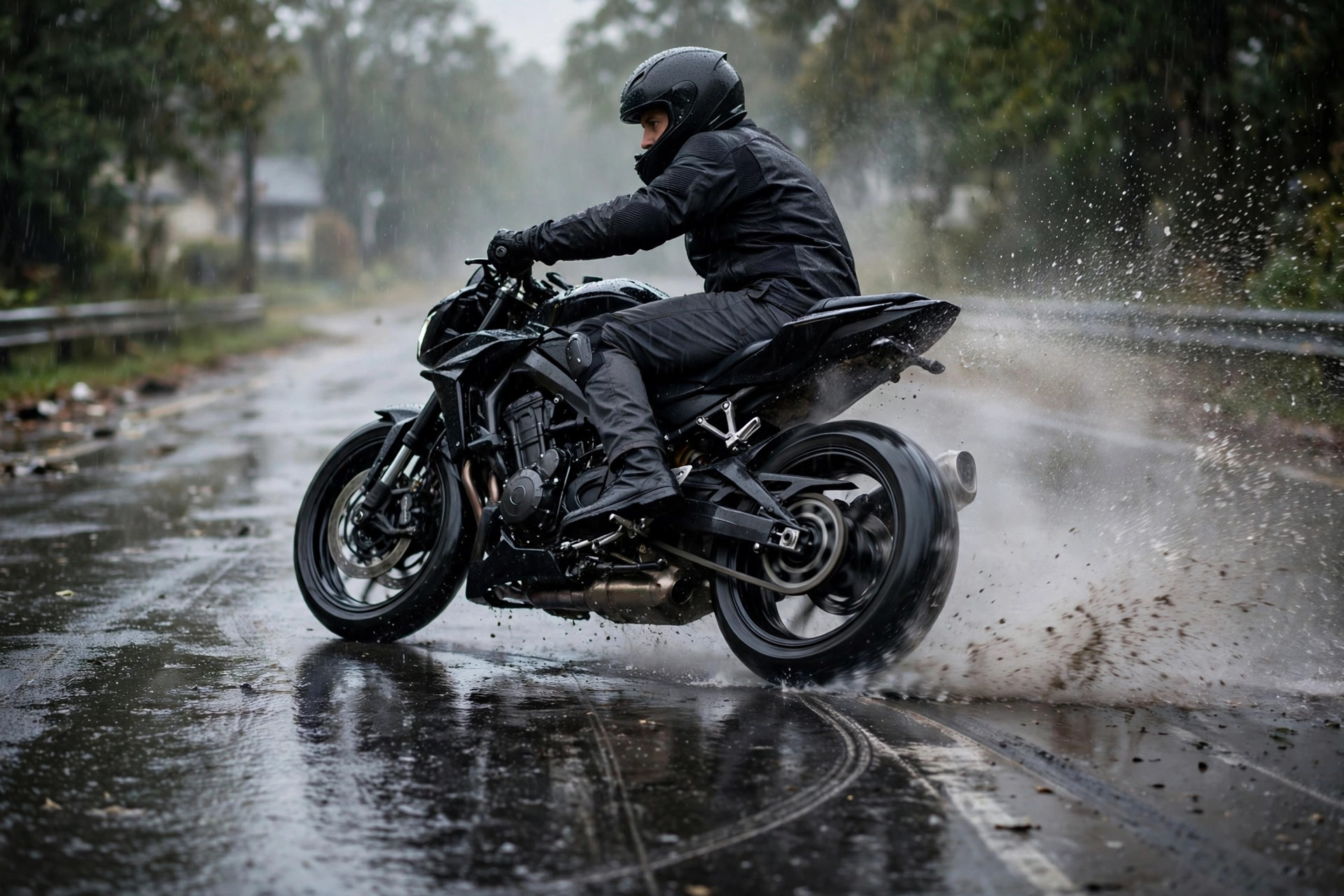
A skid happens in a second. The rear wheel steps out on a wet patch, the front wheel slips on sand, or the bike feels loose when you brake on a dusty road. Your body tenses, your hands grip hard, and your first thought is to brake harder. That is the natural reaction, and it is often the wrong one.
You cannot always stop a skid once it starts, but you can give yourself the best chance to ride through it. The key is to stay calm enough to do a few simple things: ease off, look where you want to go, and keep the bike as upright as you can. This guide explains what to do in the moment, and how to avoid the next skid.
What a skid feels like
A rear-wheel skid feels like the back of the bike is sliding to one side. The bike may feel like it is moving sideways, even though you are still going forward. A front-wheel skid feels different — the handlebar feels light, or it turns on its own, and the bike feels like it wants to fall.
Both are scary, but a rear skid is more common and often easier to ride through. A front skid is more serious, because the front wheel steers the bike. If the front slips, you need to act gently and quickly.
Do not expect to feel in control. Expect to feel surprised. The goal is not to feel calm. The goal is to do the calm thing, even while you feel scared.
In the moment: ease off, do not grab
If the bike starts to skid, the first thing to do is ease off the throttle, slowly. Do not snap it shut, and do not twist it harder. A smooth release lets the wheels regain grip.
Do not grab the brakes hard. If you are already braking and the wheel locks, ease off the brake a little, just enough for the wheel to turn again. A locked wheel cannot steer. A rolling wheel can.
Keep your body relaxed, as much as you can. A stiff body makes the bike feel nervous. Loosen your grip a little, keep your elbows soft, and let the bike move under you. Your knees can grip the tank gently to help you stay steady, but do not lock your arms.
Look where you want to go. This is hard, because your eyes want to look at the wet patch, the sand, or the edge of the road. If you look there, you will steer there. Pick a clear path ahead, even a small one, and look at it. Your hands will follow your eyes more than you think.
If the rear wheel is sliding, do not try to steer hard against it. Keep the bike pointing in the direction you are moving, and let it settle. If you overcorrect, the bike can snap back the other way. Small, smooth movements are better than big, sudden ones.
Where skids happen most
Skids often happen in the same places. After the first rain, the road is at its worst. Rain mixes with dust and oil, and the surface becomes slippery. The first 15 minutes of rain are riskier than a steady downpour later, when the road has been washed a little.
Painted road markings, metal plates, and manhole covers are slippery when wet. Avoid braking or turning hard on them. Cross them in a straight line, at a steady speed, if you can.
Sand and gravel collect near the edges of the road, at junctions, and after road work. Slow down before a turn, not in the middle of it. If you see sand ahead, ease off early, and go straight through it if you cannot avoid it, without braking hard.
Leaves, mud, and wet patches near a water tanker or a tap are also common in Indian cities. Watch for a dark patch on the road, especially in the morning. A dark patch can be water, oil, or mud. Treat it as slippery until you know it is not.
How to reduce the risk before you ride
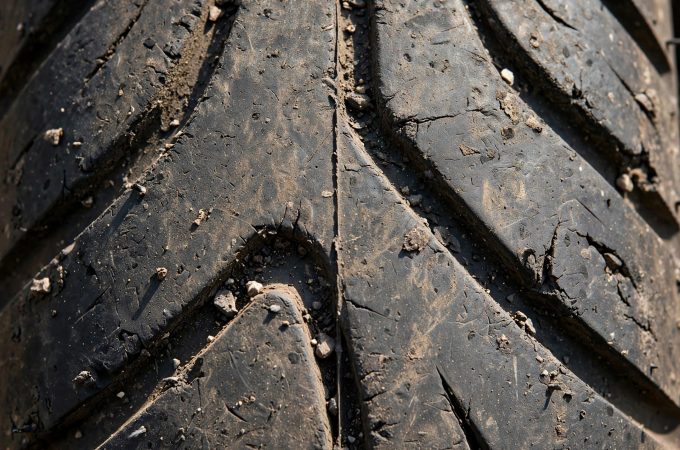
Check your tyres before a ride. Worn tread grips less, especially in the rain. Check the pressure too. A tyre with too little air can feel vague in a turn, and a tyre with too much air can skip over a bump.
Brake early and smoothly. In the rain, start braking earlier than you would on a dry road. Use both brakes, with a little more front brake on a dry road and a gentler touch on a wet one, as per your bike’s manual. Do not brake hard while leaning into a turn. Brake in a straight line, then turn.
Keep a bigger gap in the rain. The bike ahead may brake suddenly, and you need more distance to stop. Slow down at junctions, and be ready for a vehicle to stop without warning.
Practise in a safe place. In an empty parking area, practise slow braking, gentle turns, and stopping in a straight line. You do not need to practise skidding. You need to practise the smooth braking and steering that makes a skid less likely.
Quick checklist
- Ease off the throttle smoothly, do not snap it shut
- Do not grab the brakes hard — ease off a locked wheel so it can roll again
- Keep your grip loose, elbows soft, and look at the clear path ahead
- Do not overcorrect a rear slide — small, smooth movements only
- After a skid, slow down, pull over safely, and check yourself and the bike
- Slow down early in rain, on painted marks, metal plates, sand, and gravel
- Check tyres and pressure before a ride, and brake in a straight line before a turn
A skid will always feel sudden, but your response does not have to be sudden. Ease off, look ahead, and let the bike settle. Most skids end in a few seconds. The riders who get through them are not the ones who never feel scared. They are the ones who have practised the calm response before they need it.

Amelia Brooks
Editorial pen namePractical guides to phones, two-wheelers and gaming from the NewsHoxs desk. Read the bio & browse all stories ↗
See our coverage methodology or send a correction.