You go on a trip for two weeks, come back, press the starter, and nothing happens. Or the bike starts, but the horn is weak and the lights are dim. It is a common problem when a bike sits unused. A battery does not stay full just because the bike is parked. It slowly loses charge, even when nothing is switched on.
You do not need to ride every day to keep a battery healthy. You need a few small habits. A short ride once a week, a clean connection, and a check before a long gap can save you a dead battery, a push start, and a new battery sooner than you need one.
Why a battery goes flat when you do not ride
A battery powers the starter, the lights, the horn, and the ignition. When the engine runs, the bike charges the battery back up. When the bike sits, there is no charging, but there is still a tiny drain. The clock, an alarm, or a small accessory can draw a little power all the time. Over days and weeks, that adds up.
Heat and cold make it worse. In summer, heat can speed up the loss of charge. In a cold morning, a weak battery finds it harder to start the engine. A battery that is already low will fail first on a cold day, not on a normal one.
Age matters too. A battery that is three or four years old will hold charge less well than a new one. If your battery is old and you ride less, you need to be more careful, not less.
Ride it, even for a short time
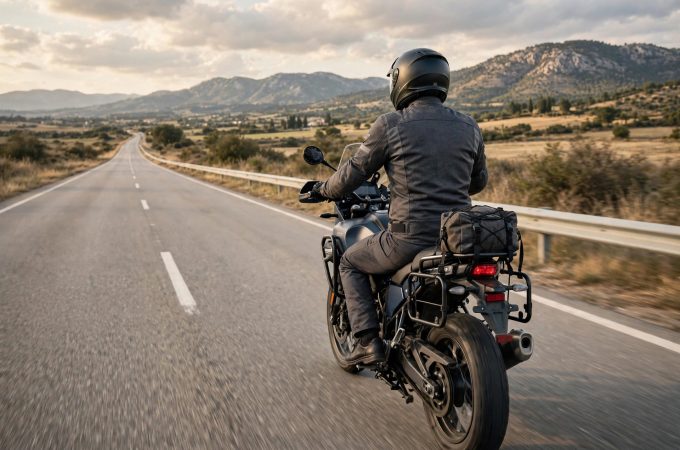
The simplest way to keep a battery charged is to ride the bike. A short ride of 20 to 30 minutes, once a week, is usually enough. The ride should be long enough for the engine to warm up and for the charging system to work. A two-minute ride to the shop and back is not enough. It uses power to start, and does not give the bike time to charge it back.
If you cannot ride, start the engine and let it run for 10 to 15 minutes, once a week, in an open area. Do not do this in a closed garage. The exhaust needs fresh air. While the engine runs, do not just leave it idling with the lights on. Let it run steadily, and then switch it off.
If you know you will not ride for a month or more, tell a family member or a neighbour to start the bike for you, or ask a mechanic about a battery charger made for bikes. A small trickle charger, used as per its instructions, can keep a battery topped up during a long gap. Do not use a car charger unless it is made for a bike battery and you know the settings. The wrong charger can damage the battery.
Keep the terminals clean and tight
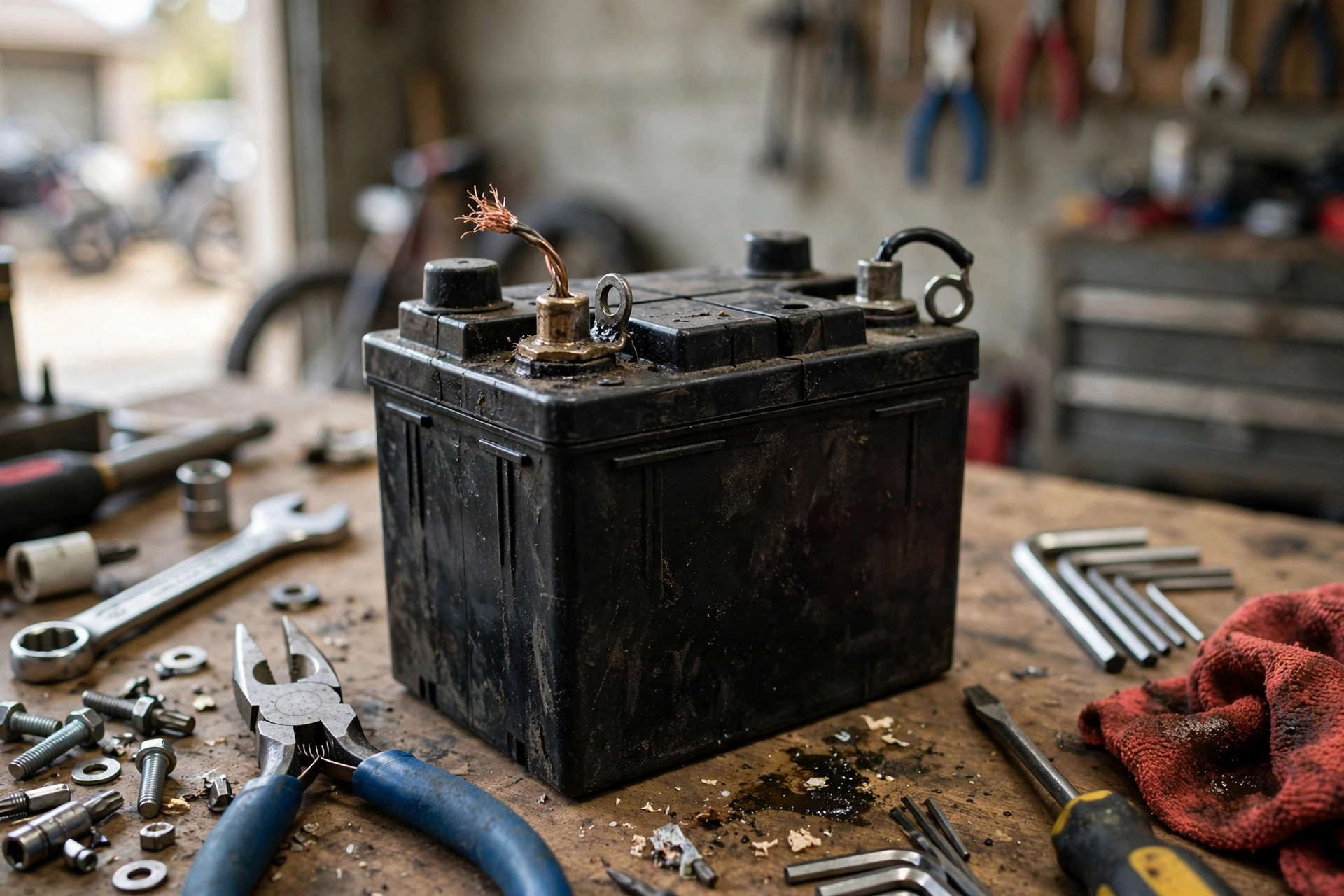
The battery has two terminals, usually marked plus and minus. If they are loose or covered in a white or green powder, the connection is weak. The bike may not start, even if the battery itself is fine.
Check the terminals once a month. Switch the bike off, and look at the connections. If they are loose, tighten them gently with the right tool. Do not over-tighten. If there is powder or rust on them, clean it with a dry cloth or a soft brush. You can use a little petroleum jelly on the terminals after cleaning to slow down future build-up, if your mechanic suggests it. Keep your hands clean, and wash them after.
Check the wires near the battery too. A wire that is cracked, loose, or touching the frame can drain the battery or cause a short. If you see a damaged wire, do not try to fix it with tape and ride on. Get it checked.
Switch off everything before you park
It sounds obvious, but many flat batteries come from something left on. A headlight left on, a phone charger still plugged in, or an accessory light that stays on can drain a battery overnight.
Before you walk away, check the key position. Make sure the ignition is fully off, not in a parking light position. Check that the headlight, indicators, and any extra lights are off. Unplug a phone charger or a USB accessory. If you have an alarm, know how much it draws, and if you will be away for a long time, ask a mechanic if it is safe to disconnect the battery.
Park in a dry place if you can. Rain and damp can make connections worse over time. A cover helps, but make sure the bike is dry before you cover it, and that the cover allows some air flow. A wet bike under a tight cover can trap moisture.
Quick checklist
- Ride for 20 to 30 minutes at least once a week, or start the engine weekly in an open area
- Switch off lights, charger, and accessories before you park
- Check battery terminals once a month for looseness and white or green build-up
- Park in a dry, covered place when you can
- Watch for slow starting, dim lights, and a weak horn
- If you will be away for a month or more, ask a mechanic about a proper bike battery charger
- Get the battery tested if it keeps going flat, even after a ride
A battery is a small part, but a flat one can ruin a morning. A weekly ride, a clean terminal, and a habit of switching everything off will keep it ready when you need it. If you ride less, check it more. That is the whole trick.

Amelia Brooks
Editorial pen namePractical guides to phones, two-wheelers and gaming from the NewsHoxs desk. Read the bio & browse all stories ↗
See our coverage methodology or send a correction.