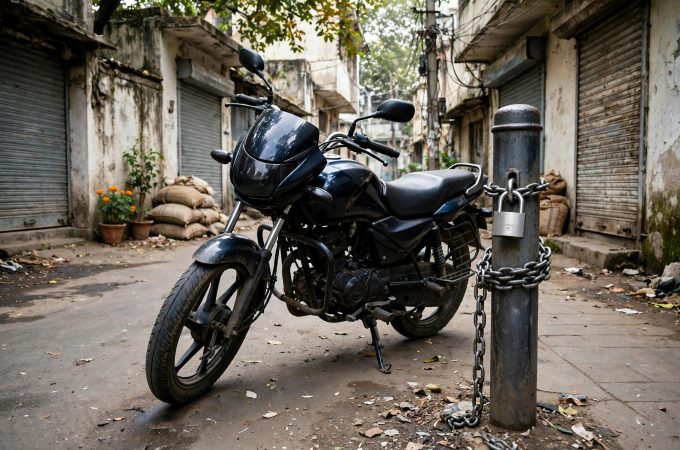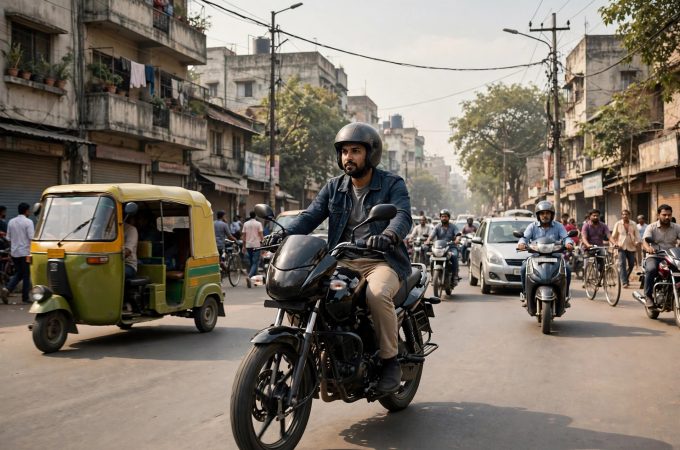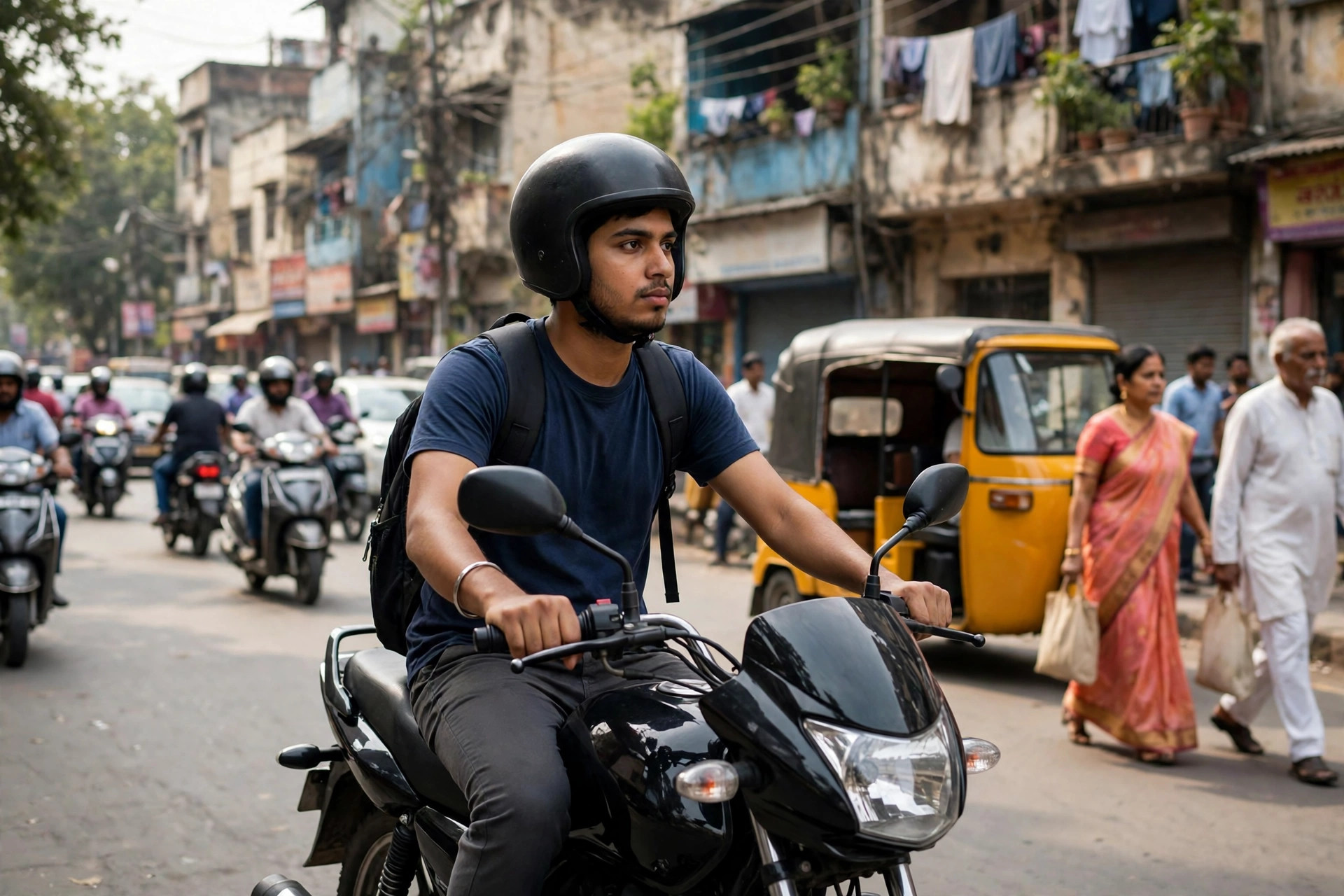
The first few weeks in city traffic feel noisy and fast. Buses pull out without warning, autos stop in the middle of the road, a pedestrian steps out from behind a parked car, and the rider behind you is already honking. It is normal to feel tense. Every new rider feels it. The goal is not to become fearless. The goal is to become steady, so you can notice what is happening around you instead of reacting to it in a panic.
Start with short rides on roads you know. Go to the nearby market, to a friend’s house, or to work on a route with fewer turns. Avoid the busiest junction in the city for your first week. Confidence grows from small, successful rides, not from one long, scary one.
Slow down before you need to
Most beginner mistakes in traffic come from speed, not from lack of skill. If you are going a little slower, you have time to see a car indicator, a dog on the side, or a pothole ahead. If you are going fast, you see it too late.
Keep your speed at a level where you can stop within the distance you can see. In a crowded lane, that is often much slower than the speed limit. That is fine. Let faster riders pass you. You do not need to keep up with them.
Use both brakes gently, not one brake hard. Cover the brake lever with a finger or two in slow traffic, so you are ready, but do not ride with the brake pressed. When you need to stop, ease off the throttle first, then brake smoothly. A sudden grab can lock a wheel, especially on a wet or dusty road.
Practise stopping in an empty parking area. Ride at a slow speed, stop in a straight line, put a foot down, and start again. Do it ten times. It sounds boring, and it works. Your hands will learn the right pressure before you need it in real traffic.
Keep a gap you can use
In traffic, the gap in front of you is your safety. If the car ahead brakes suddenly, you need space to stop. If a bike cuts in front of you, you need space to slow down without hitting it.
A simple rule is to keep at least one bike length in slow traffic, and more as your speed rises. Watch the vehicle ahead, not just the one right in front of you. If you can see two or three vehicles ahead, you will spot brake lights earlier.
Do not ride in a car’s blind spot for long. If you are next to a car or a bus, either pass it when it is safe, or drop back where the driver can see you in the mirror. A driver who cannot see you cannot avoid you.
At a signal, stop behind the line, not past it. Leave space on your left and right if you can, so you have a way out if the rider behind you comes too close. When the light turns green, check the cross traffic once before you move. In many Indian cities, a vehicle will still be crossing on red.
Read the road ahead, not just the bike ahead
Good riders look ahead. They notice a bus at a stop, and expect someone to step out from behind it. They notice an auto with its indicator on, and expect it to turn. They notice a pile of sand, a wet patch, or a metal plate on the road, and move early.
Look for clues. A car’s front wheel turning, a driver’s head turning, a pedestrian looking at their phone near the kerb — these are all signs. You do not need to predict everything. You just need to slow down a little when something looks uncertain.
Avoid the middle of the lane where oil and dust collect, especially after the first rain. Ride in the left or right tyre track of the cars ahead, where the road is cleaner and you are more visible. Keep away from parked cars by at least a door’s width. A door can open without warning.
Be visible and be clear
Wear a light-coloured helmet and, if you can, a light jacket. At night, a reflective strip on your jacket or bag helps a lot. Your bike’s headlight should be on in low light, and your tail light should work. Check them before a night ride.
Use your indicators early, and turn them off after the turn. An indicator left on confuses everyone behind you. Use your horn sparingly, to warn, not to push. A short horn before an overtake, or when a pedestrian is about to cross, is enough.
When you change lanes, look in the mirror, look over your shoulder, and then move smoothly. Do not swerve. A smooth move gives other drivers time to adjust. If you are unsure, stay in your lane. It is better to miss a turn and take the next one than to cut across traffic.
Quick checklist
- Start with short rides on roads you know well
- Keep your speed low enough to stop in the distance you can see
- Leave a clear gap in front, and watch two vehicles ahead
- Stay out of blind spots, and do not ride too close to parked cars
- Use indicators early, check mirrors, and look over your shoulder before changing lanes
- Wear a light helmet and jacket, and check your lights before a night ride
- If you feel scared, pull over and rest for a few minutes
City riding gets easier with practice, not with speed. The riders who look calm in traffic are not the fastest ones. They are the ones who leave space, look ahead, and make small, early decisions. Give yourself a few weeks of short, steady rides, and the same road that feels noisy now will start to feel familiar.

Amelia Brooks
Editorial pen namePractical guides to phones, two-wheelers and gaming from the NewsHoxs desk. Read the bio & browse all stories ↗
See our coverage methodology or send a correction.