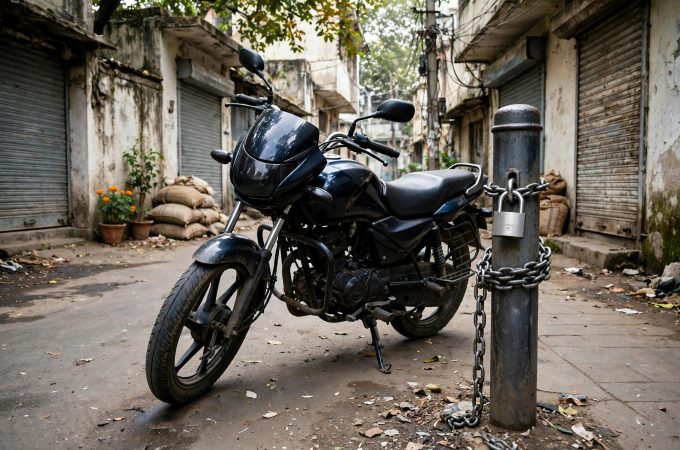
Tyres are the only part of your bike that touches the road. When they are worn, braking takes longer, the bike feels loose in a turn, and a small pothole can do more damage than it should. The problem is that wear happens slowly. You ride the same bike every day, so you do not notice the grip getting worse until a rainy day shows it.
A quick check once a month takes five minutes. You do not need special tools for the basic version. A coin, your eyes, and your hands are enough. If you find something odd, a mechanic can confirm it in a few minutes. This guide shows you what to look for, and when to stop riding on a tyre.
Start with a cold check
Check your tyres when the bike has been parked for a few hours, not right after a ride. Tyres warm up when you ride, and the pressure reading will be higher than normal. Morning, before your first ride, is a good time.
Park on a flat surface, on the centre stand if your bike has one. That way both wheels are off the ground or easy to turn. If you only have a side stand, turn the handlebar and roll the bike a little to see the whole tyre, section by section.
Look at the whole tyre, not just the part facing you. A worn patch can hide at the back. Turn the wheel slowly and check the full circle.
Look at the tread
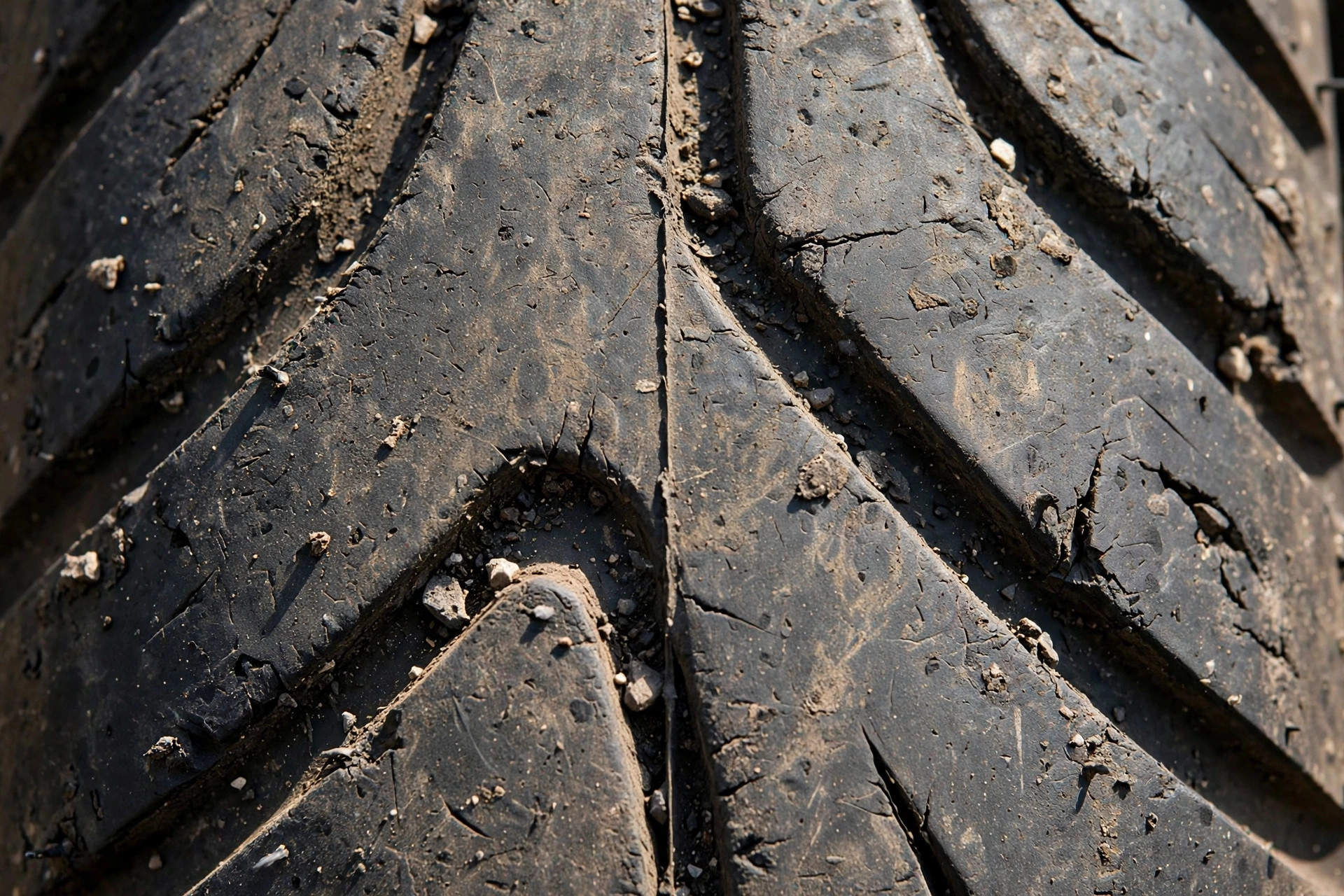
The tread is the pattern of grooves on the tyre. It moves water away in the rain and gives the tyre grip. When the grooves get shallow, the tyre cannot do that job well.
Most tyres have a small raised bar inside the groove, called a tread wear indicator. It sits low in the groove when the tyre is new. When the tread wears down to the level of that bar, the tyre is worn out. You can feel it with a fingertip. Run your finger across the groove. If the bar feels almost level with the surface, it is time to change the tyre.
You can also use a coin. Put a one-rupee coin into the groove with the number side down. If you can see most of the coin’s edge above the tread, the groove is too shallow. This is a rough check, not a lab test, but it is useful at home.
Check the centre and the edges. A tyre that is worn only in the centre may have been run with too much pressure for a long time. A tyre worn on both edges may have been run with too little pressure. A tyre worn on one side only can point to a wheel alignment or suspension issue. Note what you see, and tell the mechanic.
Check the sides and the surface
The sidewall is the smooth side of the tyre. Look for small cracks, cuts, or bulges. Small, fine cracks can appear as a tyre gets old, even if the tread still looks good. A deep cut, a piece of rubber missing, or a bulge that sticks out is a warning sign. A bulge means the inner structure may be damaged. Do not ride far on a tyre with a bulge. Get it checked the same day.
Look for nails, screws, stones, or glass stuck in the tread. A small stone in a groove is usually harmless, and you can pick it out with a key. A nail or screw is different. Do not pull it out at home if the tyre is still holding air. Pulling it can open the hole and let the air out fast. Mark the spot, keep the tyre inflated if you can, and go to a puncture shop.
Run your hand gently over the tread, with the bike off and the wheel still. Feel for a flat spot, a raised lump, or a patch that feels different. Wear gloves if the tyre is dirty. If you feel something odd, look closely. A flat spot can come from hard braking, and a lump can come from damage inside the tyre.
Check the pressure the right way
Pressure matters as much as tread. A tyre with too little air bends too much, heats up, and wears on the edges. A tyre with too much air feels hard, grips less, and wears in the centre. Both are bad for braking.
Check the pressure recommended for your bike. It is usually on a sticker near the chain, under the seat, or in the owner’s manual. It may list one number for riding alone, and a slightly higher number for riding with a pillion or luggage. Use the number for how you actually ride, and check the manufacturer’s page if the sticker is worn out.
Use a pressure gauge at a petrol pump or a tyre shop. Check when the tyre is cold. If you have to ride to the pump, ride slowly and check as soon as you arrive. Do not guess by pressing the tyre with your thumb. A tyre can feel firm and still be low by a few points.
Check pressure once every two weeks, and before a long ride. Top it up in small steps, and check again after. If a tyre loses pressure every few days, there may be a slow leak, a valve problem, or a small puncture. Get it checked.
Quick checklist
- Check tyres cold, once a month, and before a long ride
- Look for the tread wear indicator — if it is level with the tread, change the tyre
- Check the centre and edges for uneven wear
- Look for cracks, cuts, bulges, nails, and stones on the sidewall and tread
- Check pressure every two weeks with a gauge, using the number on your bike’s sticker
- If a tyre loses air often, has a bulge, or is very old, get it checked the same day
Tyres do not fail all at once. They give small signs first — a shallow groove, a tiny crack, a slow loss of air. A five-minute check once a month is enough to catch most of them. It is a small habit, and it is one of the best ways to keep a ride safe.

Amelia Brooks
Editorial pen namePractical guides to phones, two-wheelers and gaming from the NewsHoxs desk. Read the bio & browse all stories ↗
See our coverage methodology or send a correction.